

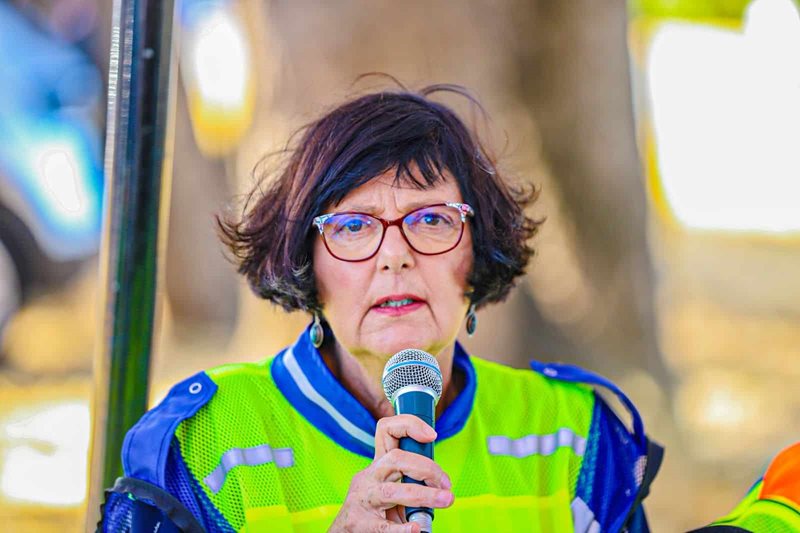
NATIONAL NEWS - Transport Minister Barbara Creecy has announced plans to amend the National Road Traffic Act to prohibit any alcohol consumption before driving, following a festive season that saw more than 1 400 fatalities.
Presenting the 2025/26 festive season road safety report on Thursday, Creecy said the current law allowing drivers to consume alcohol below a certain limit must be scrapped.
“Our driving and drinking policy was formulated almost 30 years ago. In today’s South Africa, it is totally unacceptable that there is a law that allows people to drink and then drive,” she said.
“The time has come for us to amend the law so we have a clear-cut, easy to understand and unambiguous policy that says drinking and driving is not allowed.”
The announcement comes as data shows 8 561 of 173 695 drivers tested positive for alcohol during the festive season — a 144% increase compared to the previous year.
Creecy revealed that one KwaZulu-Natal motorist recorded breath alcohol content fourteen times above the legal limit.
Festive season shows improvement but concerns persist
The 1 427 fatalities from 1 172 crashes represent the lowest number of crashes in five years and match the fatality rate from the 2023/24 festive season. It is a 5% reduction in both deaths and accidents compared to the previous year, according to Creecy.
Five provinces reported reductions in deaths, with the Eastern Cape and Free State showing the highest percentage decreases.
However, Gauteng, Western Cape, Mpumalanga, and Northern Cape recorded increases.
Analysis revealed that more than 40% of crashes and fatalities occurred between 15 and 28 December, with most incidents occurring after travellers reached their destinations.
The crashes primarily involved pedestrian collisions, hit-and-runs, single vehicle overturns and head-on collisions.
“Many of the crashes happened over the weekend between 7pm and 9pm and between midnight and 1am.
“The highest number of pedestrian fatalities were reported in the City of Cape Town, City of Johannesburg, eThekwini, Nkangala District, and the City of Tshwane,” Creecy revealed.
Small motor cars accounted for 55% of crashes, while light delivery vehicles contributed 20%. Minibuses and trucks accounted for only 7% and 6%, respectively.
Enforcement efforts intensify
Law enforcement conducted 1 632 roadblocks during the festive season, stopping 1.8 million vehicles and issuing more than 450 000 traffic fines.
Officers arrested 525 people for excessive speeding, including one Northern Cape driver clocked at 222 kilometres per hour in a 120-kilometre zone.
Authorities also arrested 89 motorists for attempting to bribe traffic officers.
Creecy thanked law enforcement agencies for their efforts.
“I want to take this opportunity to thank our traffic officers at national, provincial and local government levels, SAPS, and emergency services for the sterling work you have done throughout the year, which has resulted in this decrease in accidents,” she said.
Gauteng confronts pedestrian death crisis
Gauteng MEC for Roads and Transport Kedibone Diale-Tlabela said alcohol remains the province’s primary challenge, affecting both drivers and pedestrians.
“Our investigation is that people cross from the other side of the settlements next to the highway into the other side to go to a tavern. And when they come back drunk, that’s when the accident happens,” she explained.
The province experienced several mass-casualty incidents.
“One accident that happened in our province happened during the day, around 11 and 12,” Diale-Tlabela said, describing a family travelling with children who all died.
Another incident involved seven people who appeared to be “coming from a party very drunk” who died in a BMW during the early morning hours.
Diale-Tlabela emphasised the need for broader intervention.
“We are working closely with our department of social development because most of those are the homeless that move on our freeways,” she said.
The MEC added that the province is engaging with public transport operators and municipalities to address illegal loading and offloading on freeways.
Industry accountability measures
The South African National Taxi Council (Santaco) president, Motlhabane Abnar Tsebe, announced plans to register “patrolers” to improve accountability within the taxi industry.
“We are coming up with the database to know the cars, who’s driving that car, which association owns that car,” he said. “So that’s where we can get this thing sorted. When problems come, we know exactly where to go.”
Creecy supported enhanced driver training across the transport sector.
“I think that all citizens, in my own view, if you drive in South Africa, a defensive driving course is a very good idea,” she said.
She recommended that organised businesses in the logistics sector prioritise such programmes.
Article: Caxton publication, The Citizen
‘We bring you the latest Garden Route, Hessequa, Karoo news’