

Update
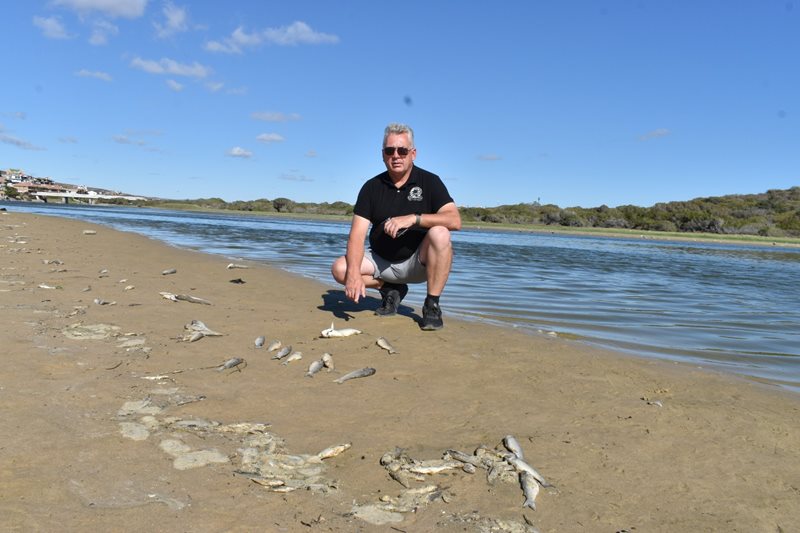
MOSSEL BAY NEWS - While local authorities have said the Hartenbos fish kill of 2 January was caused by multiple natural factors, a 2021 study and Phillip Vermaak, the Hartenbos River Forum's chairperson of the last 10 years, say otherwise.
Vermaak said millions of fish have died over the past decade due to these mass fish kills, and that it cannot be classified as natural.
He told Mossel Bay Advertiser the deaths are due to an abundance of factors and years of neglect.
On 4 January, the Department of Forestry, Fisheries and the Environment (DFFE) released a statement on the latest mass fish kill, stating that the deaths were a result of "sewerage discharge and resultant eutrophication and ammonia toxicity".
On 6 January, it released another statement, stating the fish mortalities were not due to sewage discharge, but rather a few other factors.
These include eutrophication caused by high nutrient levels from multiple sources, and low freshwater flow due to water extraction and dam development within the catchments.
The Mossel Bay Municipality said in a statement on 7 January that its environmental department has confirmed that the incident was caused by critically low oxygen levels in the water, also known as hypoxia, which developed due to natural ecological and physical factors.
"It is important to reassure residents that this event was the result of natural ecological conditions and not due to pollution or infrastructure failure," said the municipality.
"No evidence was found of sewage spills, pump station breakdowns or wastewater treatment malfunctions. In fact, routine recreational water quality samples taken by the Garden Route District Municipality before the event confirmed that the estuary was safe for bathers, with no signs of contamination."
The municipality further stated that the fish kill was driven by "well-documented environmental processes that occur in closed estuary systems during hot, stagnant summer periods".
Vermaak said while he echoed the DFFE and the Mossel Bay Municipality's sentiments that the deaths were caused by critically low oxygen levels, one of the reasons for this is the consistent flow of effluent (wastewater) from the Hartenbos Wastewater Treatment Works (WWTW) into the river and estuary.
He said while the effluent is treated before being discharged, the nutrients from it contribute to algal blooms during heatwaves, which ultimately lead to eutrophication, which is when the water is rid of oxygen and the fish suffocate.
Vermaak said another contributing factor is the progressive shallowing of the estuary, which is mostly closed. He said water heats up rapidly the shallower it is, contributing to the algal bloom.
The 2021 peer-reviewed study by Lemley et al., published by the journal Frontiers in Marine Science, also stated that the WWTW discharges introduce substantial freshwater and nutrient loads, which sustain high phytoplankton biomass (the amount of microscopic plant-like organisms in a given volume of water) and hypereutrophic conditions.
"The loss of water fluctuations due to the closed river mouth and the continuous supply of excessive WWTW inputs (flow and nutrients) have necessitated frequent and premature mouth breaching interventions to meet socioecological requirements. A reduction in the volume and nutrient loads entering the estuary directly from the Hartenbos WWTW should serve as the core focus," read the study.
It recommended prioritising the reduction or diversion of WWTW inputs and the restoration of the water fluctuation.
Vermaak said an immediate solution would be to dredge the estuary to make it deeper for the fish, so there is a place to escape the heat and algal blooms when the water warms up during heatwaves.
The DFFE said its water quality monitors, other relevant local authorities and stake-holders have confirmed that the oxygen levels in the water have normalised and that the situation is under control.
The Mossel Bay Municipality emphasised that every effort has been made to address the situation responsibly and effectively.
To read the full study, click here: Lemley et al 2021 fmars-08-688933.pdf
To read the Mossel Bay Municipality's full statement, click here: MEDIA STATEMENT - Fish Kill Mossel Bay Advertiser - 6 Jan 2026.docx
To read the DFFE's full statement, click here: Media Statement - Mass Fish Mortalities Hartenbos Estuary.pdf
Previous article: Thousands of Hartenbos River fish dead
‘We bring you the latest Garden Route, Hessequa, Karoo news’