

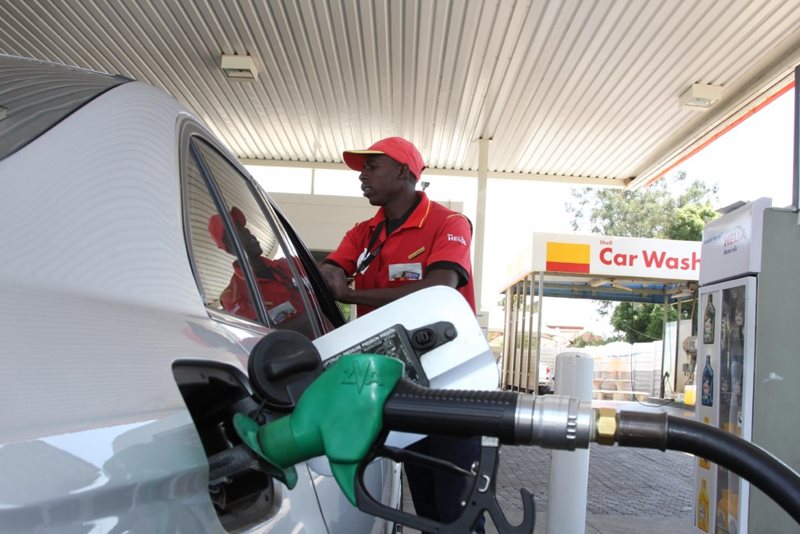
NATIONAL NEWS - South Africa experienced its largest single fuel price hike following the Department of Energy’s announcement on Monday that a litre of 93 unleaded (ULP) and lead-replacement petrol (LRP) will rise by 99 cents while the 95 variants will increase by R1. Illuminating paraffin hasn’t been spared and goes up R1.04 cents a litre in the second revision in just two months.
The latest hike will have far-reaching consequences.
South Africa is already struggling with negative per-capita growth, a poverty rate at around 40%, and unemployment nearing 27% (almost twice that for the youth).
The latest move – described by the Automobile Association as a siphon costing the economy R2.5 billion a month in transport costs – is set to put pressure on the consumer price index (CPI) by dampening disposable income figures.
Fiscal consolidation?
South Africa’s fiscal objectives include reducing the budget deficit and stabilising debt as a share of gross domestic product (GDP) over the medium term. The fiscal consolidation aims to reduce the primary deficit to near zero by 2021, with the consolidated budget deficit declining from 4.3% in 2018 to 3.5% in 2021.
Mike van der Westhuizen, portfolio manager at Citadel, says: “Although changes in fuel prices are short-term in nature – month to month – a prolonged trend of rising fuel prices like we’ve seen can actually have a negative effect on fiscal consolidation.”
While government has implemented several revenue measures for 2018/19 – including increasing the Vat rate, fuel levy and excise duties, and limiting personal income tax-bracket adjustments for inflation, which, on paper, should translate to 26.6% of GDP and rein in the spiralling debt – its hands are tied in certain respects.
The latest fuel revision was triggered by external headwinds, not fiscal reform.
As van der Westhuizen explains, the basic fuel price is adjusted for the cost of what a South African importer would pay to buy petrol from a refinery and land the product on our shores, so it is a function of the rand and US dollar oil price, and not government control.
Miyelani Maluleke, an economist at Absa Corporate and Investment Banking, agrees, saying the increase in October was primarily because of higher international oil prices and a weaker exchange rate, not because of a higher government fuel levy. “So there’s nothing in this latest increase in fuel prices that will accrue to the fiscus – it is purely just to cover the higher cost of importing Brent crude oil.”