


Update
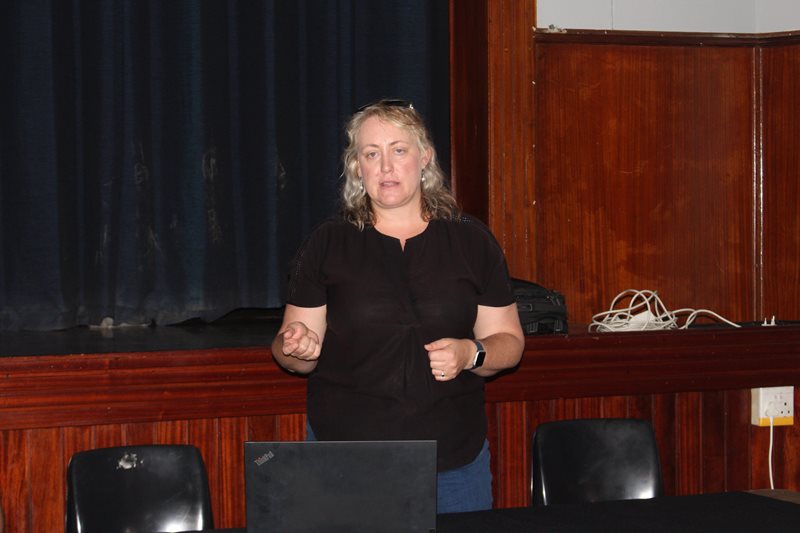
MOSSEL BAY NEWS - A foot-and-mouth disease (FMD) information session was held at the D’Almeida Community Hall in Mossel Bay on 18 February, when some important information was provided by state veterinarian Dr Leana Janse van Rensburg.
While the session aimed to focus on the relevant legislation, some law enforcement procedures pertaining to FMD and the movement of animals on public roads, some background on the disease and how it spreads, and an update on the current FMD situation in Mossel Bay were also given.
It was during this update that it was revealed that the farm next to the Hartenbos dairy farm with the initial FMD outbreak (called the index farm) has since also tested positive. There is a suspected case on a farm near Great Brak River too, however, the authorities are still awaiting test results.
The 3km quarantine radius has thus expanded to a 10km one.
Janse van Rensburg emphasised that people cannot be infected by FMD, and that it is only cloven-hoof animals such as cattle, goats, sheep, pigs and wildlife like antelope and buffalo that can. While buffalo don’t display signs of the virus, they are carriers of it if infected, and can spread the disease further.
She also emphasised how contagious the disease is and how rapidly it spreads, which, she said, is why biosecurity measures on farms are so important.
Janse van Rensburg also spoke about the vaccines, stating that the ones currently in use are ‘dead vaccines’.
This means the vaccine does not introduce the ‘live’ virus into the animal being vaccinated. This vaccine instead stimulates the immune response of the animal to lower the viral load so that it will not shed as much of the virus into its surrounding environment. Thus, the vaccine does not stop livestock from contracting the virus, but rather minimises the clinical symptoms.
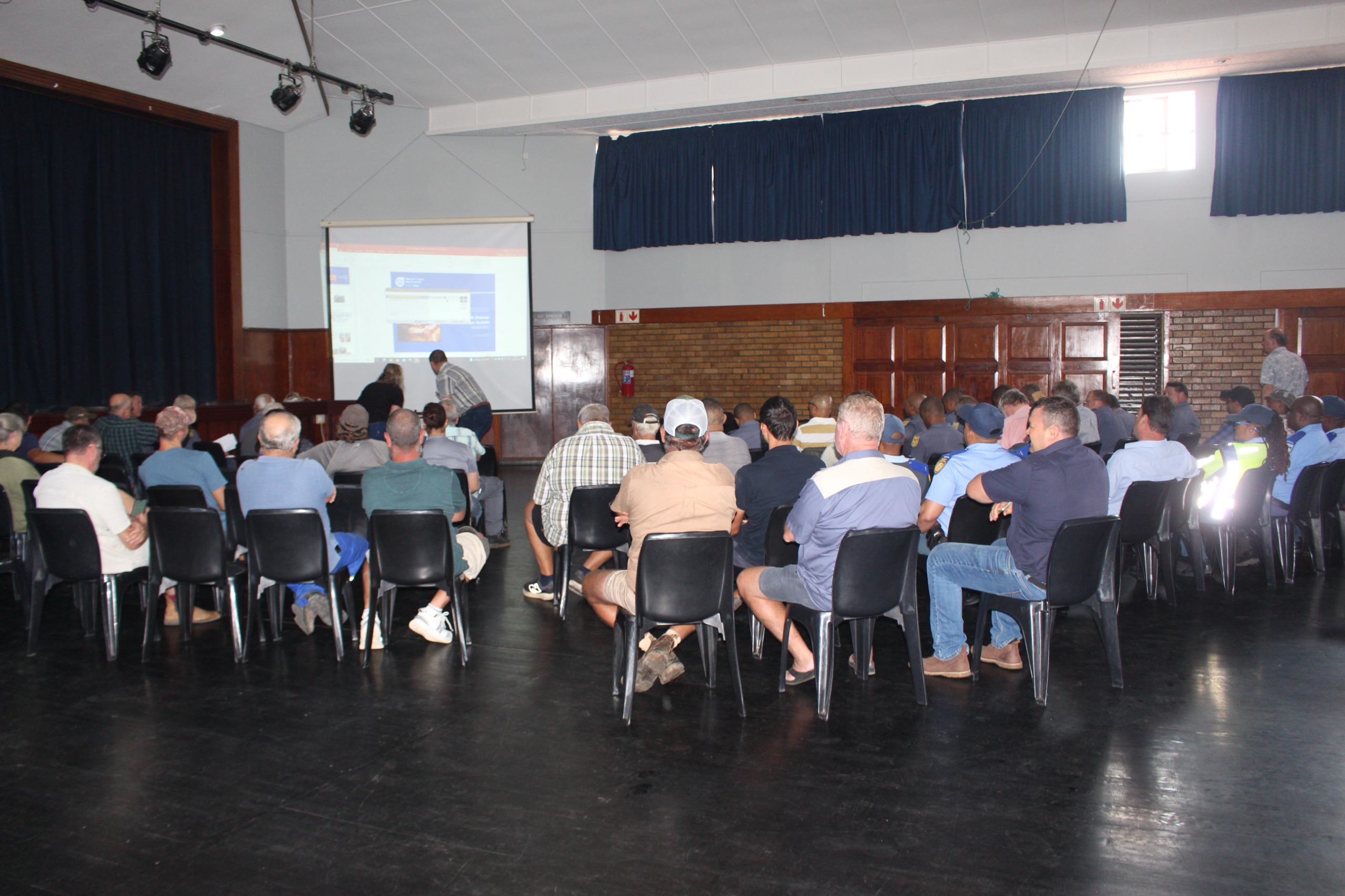 Residents, farmers, law enforcement officials and police officers at the information session. Photo: Chelsea Pieterse
She said farmers whose livestock is FMD-free and who are not in a zone with an outbreak will not be forced to get the livestock vaccinated. If these farmers wish to do so, however, they will have to request the vaccine and sign an indemnity form.
As of 17 February, according to the state vet’s presentation, a total of 5 475 farm animals have been vaccinated here in Mossel Bay and 915 in George.
Janse van Rensburg also spoke about movement control. She said the affected properties are placed under quarantine, and no cloven-hoofed animals, products or genetic material may be moved from, to or within the disease management areas except under authority of a state veterinary permit and in compliance with the conditions of such permit.
The regulatory framework for animal movement comes from the following acts:
• The Animal Diseases ACT (health and disease control) 1984 (2022, 2025) - (ADA)
• The Meat Safety Act (quality, safe and ethical product) 2000 - (MSA)
• The Stock Theft Act (proof of ownership, brandmark, valid custody) 1959 - (STA)
• Agricultural Produce Agents Council: Biosecurity rules (auctions) 2022 - (APAC)
• Road transport/welfare requirements.
Moving livestock from one property to another will require various forms. Depending on where the livestock is headed, different forms will be required:
• Origin AH (animal health) declaration
• Destination declaration (28 days isolation)
• Meat safety and animal health declaration
• Schedule 6 (of the STA)
• Schedule 8 (of the STA)
• Agricultural Produce Agents Council (APAC) Section 6 and owner declaration
• APAC Section 8 and health declaration
Visit the Garden Route District Municipality’s or the Western Cape Department of Agriculture’s websites for more information on the forms.
Responsibilities of animal and land owners
According to Janse van Rensburg’s presentation, Section 11 of the Animal Diseases Act (Act 35 of 1984) assigns a responsibility, not only to the owners of animals, but also to the owners or managers of land on which animals are kept:
• to take all reasonable steps to prevent infection of the animals with any animal disease or parasite.
• to prevent the spreading thereof from that land or animals.
• if the animals are infected with any animal disease or parasite, to eradicate the disease and parasites.
• to apply prescribed and suitable treatment for these animals.
• if there is a reasonable suspicion that it is a controlled animal disease, to report it to the local state veterinarian.
Janse van Rensburg said, in addition to the above, the following applies:
• In the case of the outbreak of controlled animal disease or the suspicion thereof, the animal owner should inform his/her neighbour, any prospective buyer and any buyer of his/her animals during the past 30 days.
• Instituting preventive compulsory vaccinations and dipping for animal diseases is described in table 2 of the Animal Disease Regulations.
• The spread of parasites such as ticks should be limited or prevented. Animals may only be moved if they are visibly free from external parasites, as required in Regulation 20 (iii).
• Once a controlled disease is present, additional responsibility, as described in the Animal Disease Regulations, will apply. That will be specific to the disease.
• Contravention of the above legislated responsibilities by an animal owner and/or a land owner is described as an offence in Article 32 of the Animal Disease Act.
‘We bring you the latest Garden Route, Hessequa, Karoo news’