


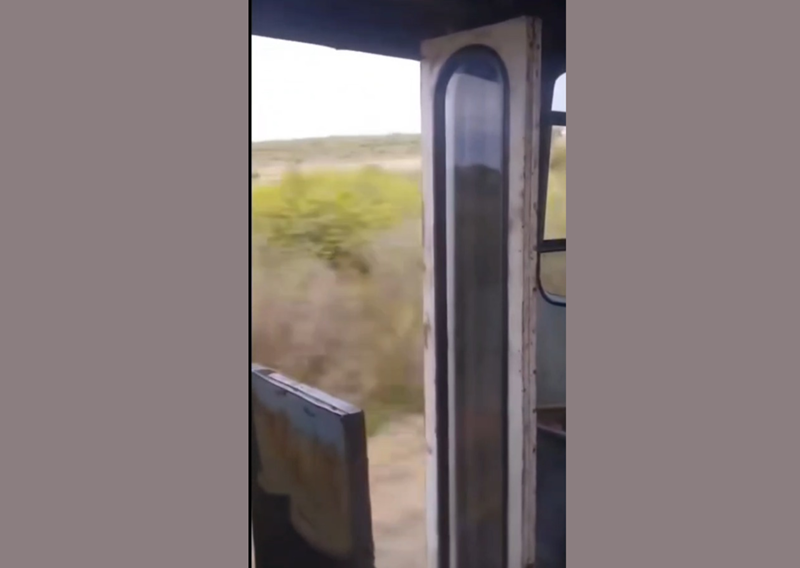
MOSSEL BAY NEWS - The Western Cape Education Department (WCED) started conducting its investigations into the matter after some video footage surfaced showing a bus somewhere in the greater Mossel Bay area being operated with its folding door open, seemingly broken.
The footage was posted on Facebook by well-known community activist Faizell Porter on 29 January. It was taken from inside the bus, and shows the open door while the vehicle is moving.
Porter, who is also a parent, said the bus on the video is one that transports children from the Herbertsdale area and surrounds to schools in Mossel Bay, and that he and some other parents have complained to the department several times about the transport available to schoolchildren.
He claimed that this particular vehicle was one the Education Department contracted, and that he and the other parents had been told the contract would come to an end in November last year.
This video shows a vehicle travelling with an open, allegedly broken door. Video: Supplied/ Faizell Porter
“There is no alternative for our children. We have spoken to the department several times. We have raised concerns about the driver of the vehicle sometimes being under the influence, and that the vehicles are not roadworthy. We have also raised concerns about children being dropped along the N2 and other risky places without any adult supervision. When we were told the contract was going to end last November, we had hoped it would go to someone else, but it just went back to the same person,” said Porter.
“We parents are worried about our children. They are travelling in a deathtrap.”
In a response to Mossel Bay Advertiser’s media enquiry into the incident, the Education Department’s Bronagh Hammond said the matter had been brought to the department’s attention by a member of the public.
“Learner transport officials in the district office are currently conducting an investigation into the matter. We view this matter as extremely serious,” she said.
Hammond said the WCED implements various processes to ensure that learners on the learner transport scheme are transported in accordance with legislative prescripts.
She said when a new contract is entered into for a particular route, the following is required:
• The contractor submits a certified and valid licence and roadworthy certificates for each approved vehicle on the route.
• Sufficient seating capacity is available for the transportation of all the approved learners on a route.
• All vehicles contracted by the WCED are required to go for a roadworthy inspection every six months for the duration of the contracted period.
• A monthly report must be submitted to the vehicle testing co-ordinator at head office, listing the vehicles tested and the new licence and roadworthy certificates within a particular month.
Hammond added that in order to ensure further safety, unannounced (blitz) vehicle inspections may be conducted in response to internal or external queries about alleged non-compliance by contractors.
She said scheduled route and vehicle inspections are conducted on a regular basis, and the aim is to have all the routes within a district inspected over a period of time.
“A route inspection must include the inspection of the school’s administration of the routes that service the school. Schools are required to monitor the delivery of the service on the specific routes on a regular basis to ensure that the contracted and correct vehicles are used, and that the service is delivered safely and within the conditions of contract,” she said.
Hammond said the principals or their delegated officials are required to undertake regular inspections of vehicles as they arrive at school and address any discrepancies with the contractors, requiring them to remedy any non-compliance.
She said in cases of persistent non-compliance, the schools are required to inform the relevant learner transport officials in the districts.
Should the roadworthiness of any vehicle assigned to a learner transport scheme route be questionable at any time, a vehicle test should be considered immediately.
Hammond said non-compliance with contractual obligations, including overloading of vehicles, leads to written warnings and eventually the termination of the contract in cases of persistent non-compliance.
‘We bring you the latest Garden Route, Hessequa, Karoo news’