


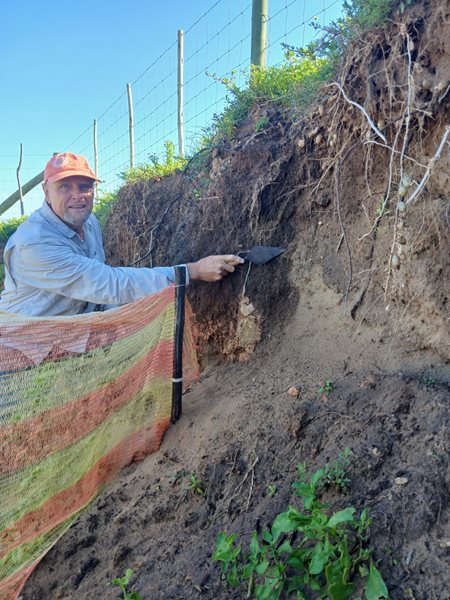
HARTENBOS NEWS - The mystery surrounding an unknown historic cemetery uncovered during the construction at Hartland Lifestyle Estate near Hartenbos remains unsolved.
The public participation process is now completed, but no relatives or descendants have been identified. The discovery of the graves, believed to date back to the 18th or 19th century, was made late last year during some development work on a cul-de-sac.
At least nine individuals, five adults and four children, were found, although only eight graves were identified, as one had been disturbed by the construction.
Archaeologist Peter Nilssen said there were no visible signs of the cemetery before construction began, and no gravestones or markings were found that could reveal who the buried were.
"Despite a lot of investigation, the public participation process could not identify these individuals. Nobody knew these graves existed," he said.
Nilssen was called to the site after the workers had noticed some bones during the excavation.
"The excavator was busy digging, and they started seeing bones. Some of the material had already been loaded onto tipper trucks, but fortunately, the workers realised something was wrong and emptied the material back here," he said.
 Archaeologist Peter Nilssen at one of the graves. Photo: Louise Karsten
The contractor immediately contacted the environmental control officer, who contacted the developer, and Nilssen arrived on the site shortly afterwards. He said the developer had been very proactive in helping out with the whole process.
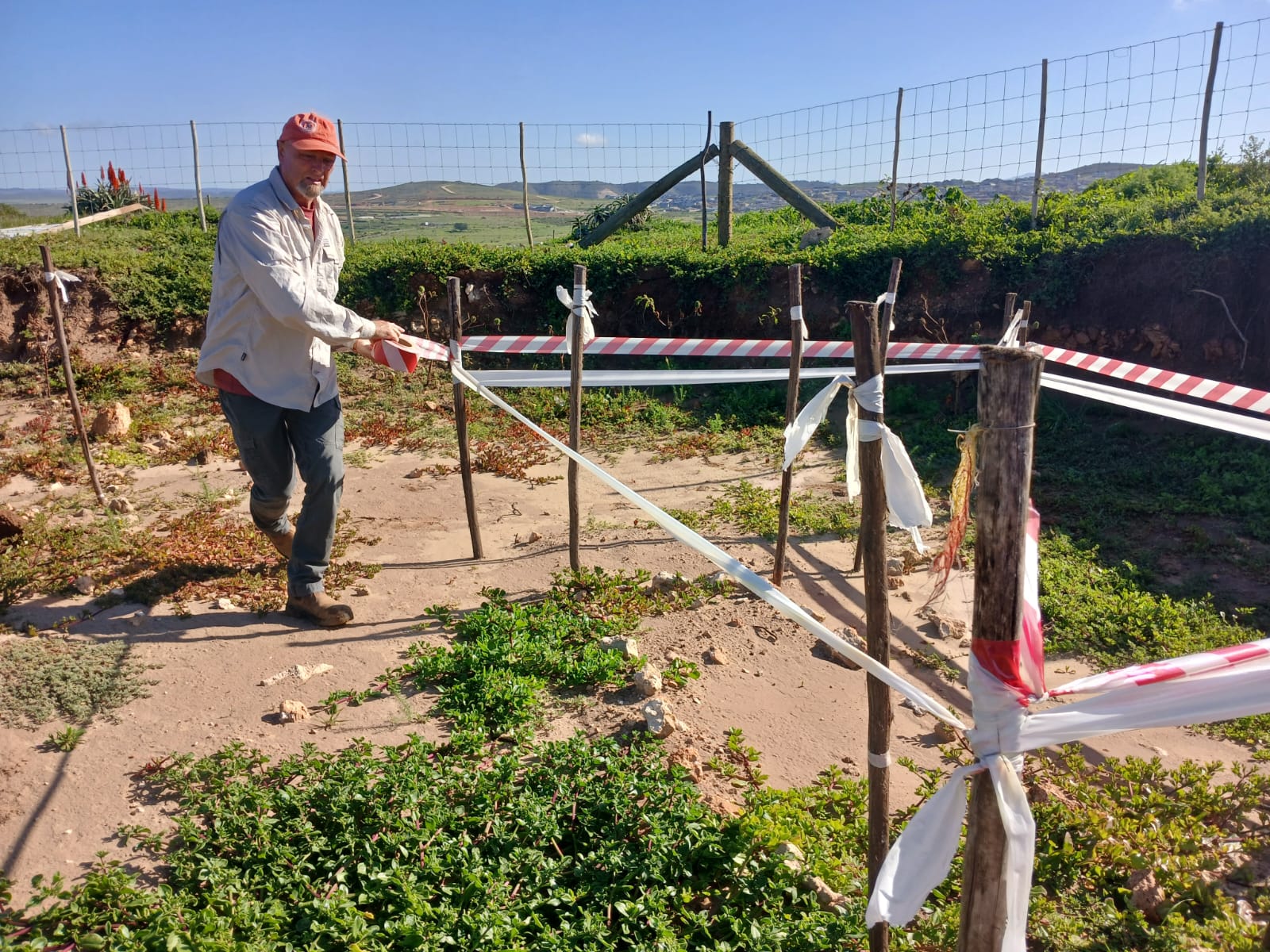
"I identified the bones as human remains, and we immediately put up hazard netting around the site to secure it. The police arrived, collected some human remains and pieces of coffin wood, and the site was closed."
A permit application was then submitted to Heritage Western Cape as an emergency application to allow for investigation and removal of the remains. During the investigation, Nilssen uncovered more graves than were initially expected.
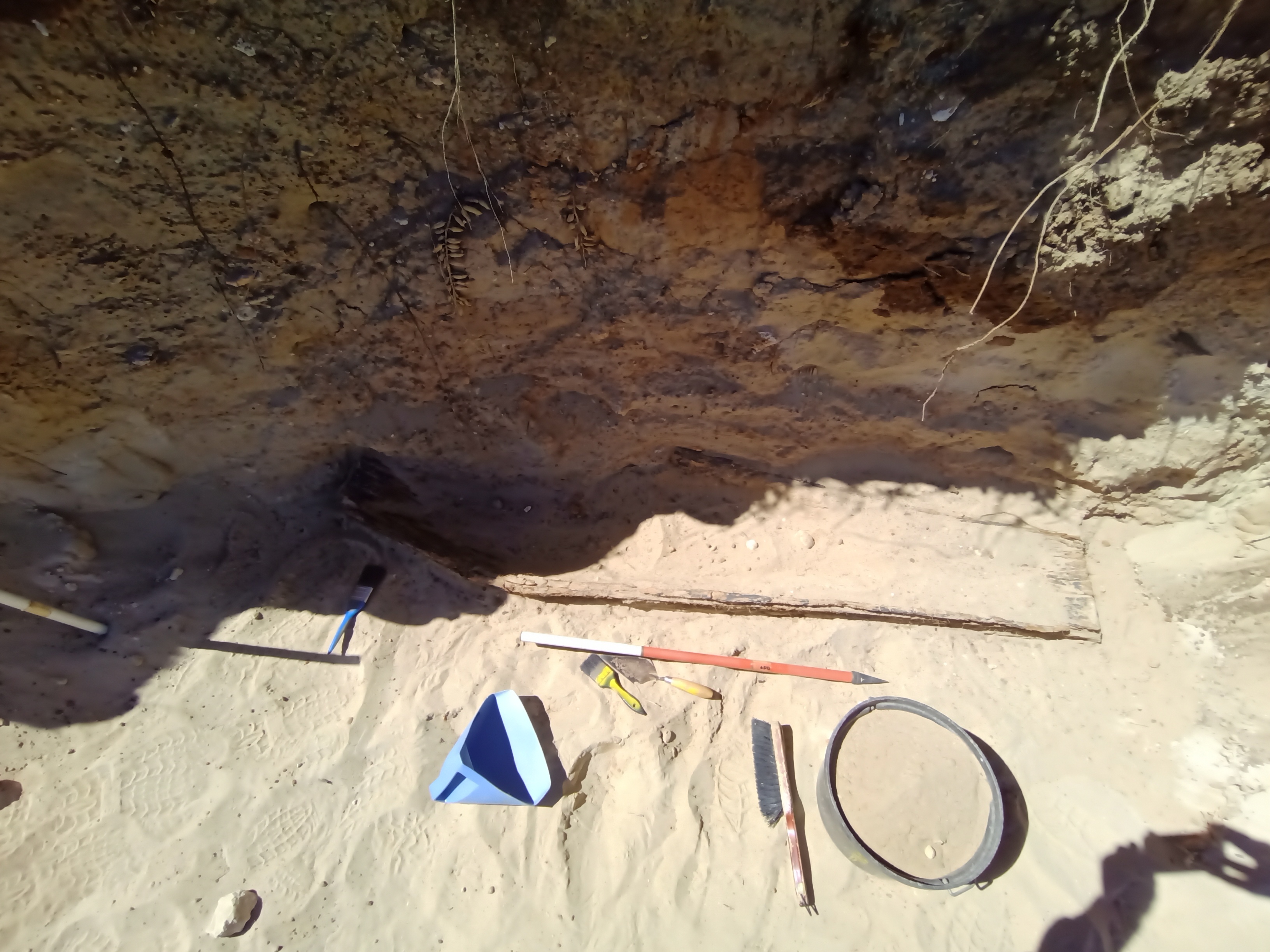 The outline of a coffin at the grave sit. Photo: Peter Nilssen
"I first saw a clear cut between natural and fill sediment and realised it was a grave shaft. I excavated down and found a complete coffin. Once I cleaned it up and documented it, I knew there were more than just two graves here."
The archaeological investigation revealed nine graves. Four could be left undisturbed as they were not affected by the development, while the remaining ones were too shallow and had to be rescued.
The human remains are currently being kept at the Da Gamaskop Police Station for safekeeping while Nilssen completes further work before the reburial process.
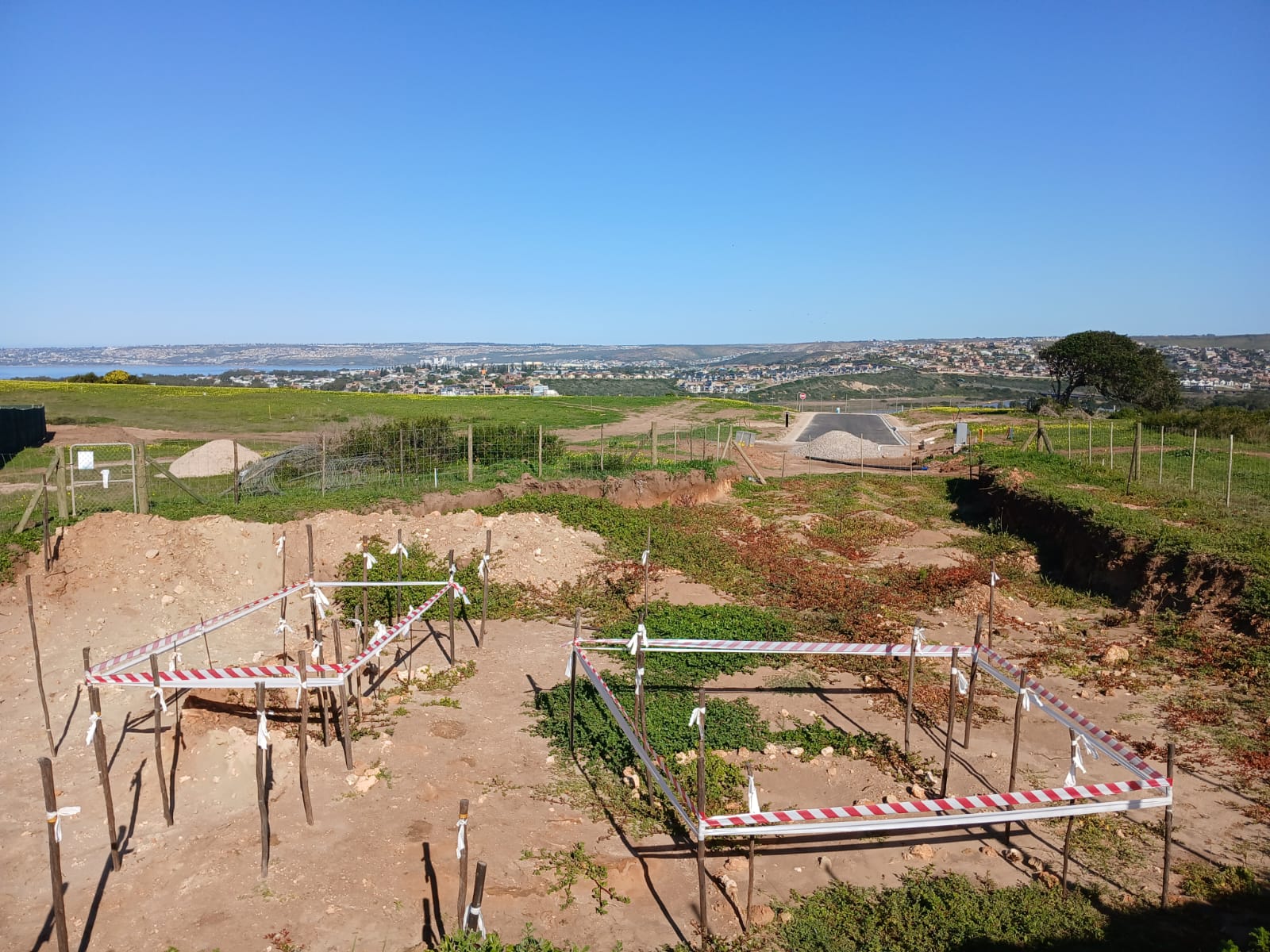 The area where the graves were found. Photo: Louise Karsten
The identities of the buried remain unknown, but Nilssen believes they may have been linked to early farming activities in the area. "Archives show that when landowners had burials, they often had cemeteries near the farmhouse. We know the main house was near the Hartenbos River and there was business activity here. It is possible these were family graves of farmers, but potentially also labourers," he said.
The graves are believed to have formed part of a private cemetery dating back to the colonial period. Nilssen said the remains will be respectfully reburied on site once the process is complete, with a memorial plaque to be erected. Funeral service provider Avbob has offered to assist with the reburial, free of charge.
"For us, it is about respecting these people and giving them a proper resting place," he said.
‘We bring you the latest Garden Route, Hessequa, Karoo news’