

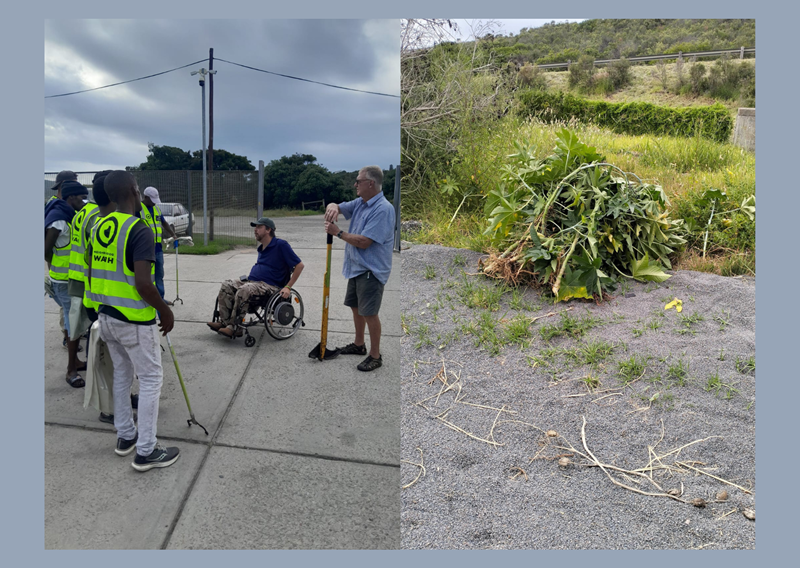
MOSSEL BAY NEWS - Operation Skoonbrak, a joint initiative between various local organisations, saw over 1 000 castor oil plants, several other alien invasive plant species and 26 bags of rubbish being removed from parts of Great Brak River on Saturday 14 March.
The operation included the Great Brak River CPF, the Great Brak River Conservancy, some neighbourhood watches, the Department of Correctional Services, AfriForum, the Great Brak River Police and the Outeniqualand Farm Watch.
The Great Brak River CPF’s chairperson, Jacky Carstens, said the group cleaned up the area next to the police station, as well as the verges next to the R102 between the on-ramp near De Dekke, all the way down to under the bridge near Station Road.
The Great Brak River Conservancy’s chairperson, Scott Thomson, said in total, six Lantana camara (Verbenaceae) plants, five malpitte (Datura stramonium) and 1 023 castor oil plants (Ricinus communis) were removed. All three of these plants are category 1b invasive alien species, which means they must be controlled or removed. These plants cannot be planted or traded.
Thomson said 26 bags of rubbish were collected, and then 17 aloe plants were planted in the Great Brak Police Station’s garden.
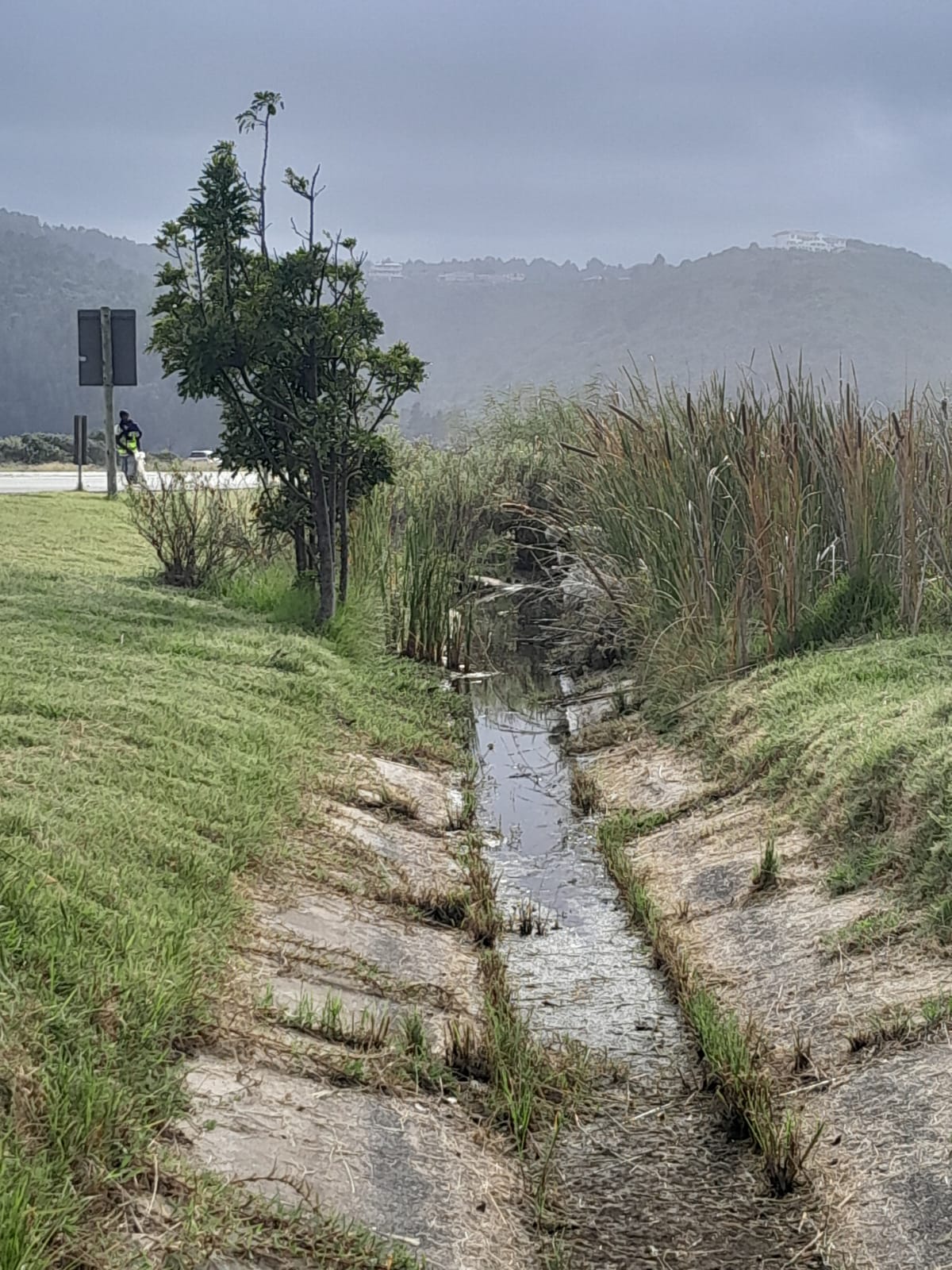 One of the areas tackled during Operation Skoonbrak. Photo: Supplied
Carstens said they have more clean-ups and projects planned for the area, and that she is looking for more Cape aloes to plant at the police station.
To see where you can help out with these projects, contact her on 063 162 9345. The Cape aloes can be dropped off at the Great Brak Police Station.
The week before, on 6 March, Val Marsh, a member of the Great Brak River Conservancy, set out with two volunteers, Joseph Soko and Tambulani Nyirenda, to clear several verges around the village of pampas grass (Cortaderia selloana).
Pampas grass is also a category 1b plant. Thomson said it is banned from sale and propagation. It may not be grown and must be removed.
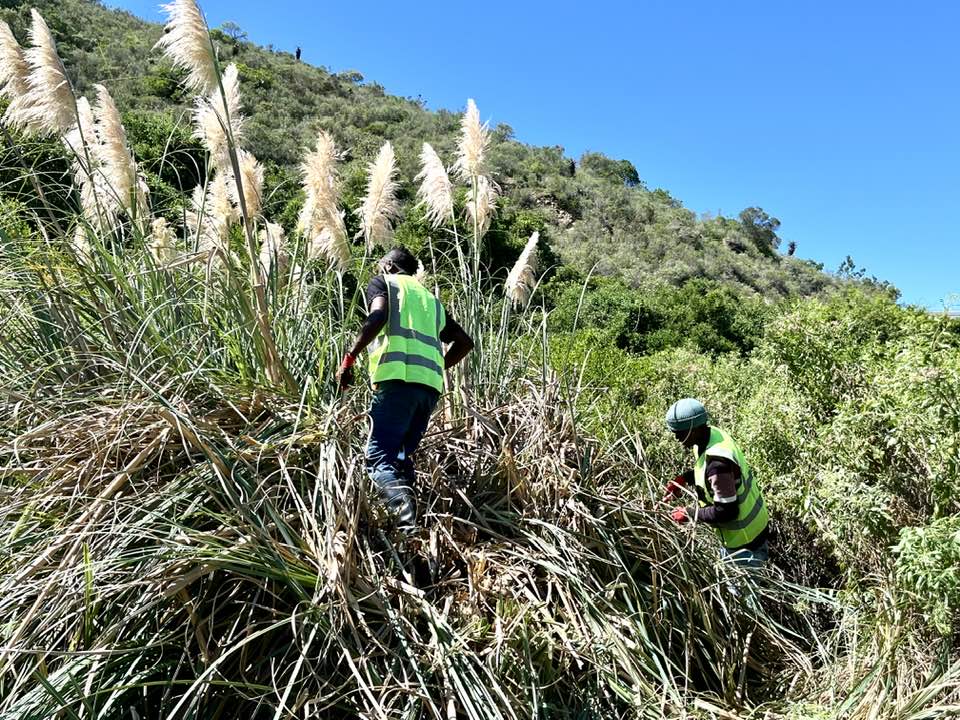 Joseph Soko and Tambulani Nyirenda take on the pampas grass in Great Brak River on 6 March. Photo: Val Marsh
“Yet it is everywhere. A single mature plant can produce 200 000 to one million seeds per annum,” he said.
Marsh, Soko and Nyirenda spent the morning hacking down plumes and bagging them for incineration. The stems were cut back and the crowns (the area where the stem meets the root) had herbicide applied to them.
Marsh said they tackled the area near the Great Brak River Heights and other clumps along Station Road and Lang Street. She said the plants they removed were from municipal land. The ones that remain are on private land.
Thomson added that the conservancy is planning a public hacking event in the near future. “We would like to start generating a list of interested ‘hacktivists’,” he said.
If anyone is interested in joining this event, send an email to [email protected].
‘We bring you the latest Garden Route, Hessequa, Karoo news’