


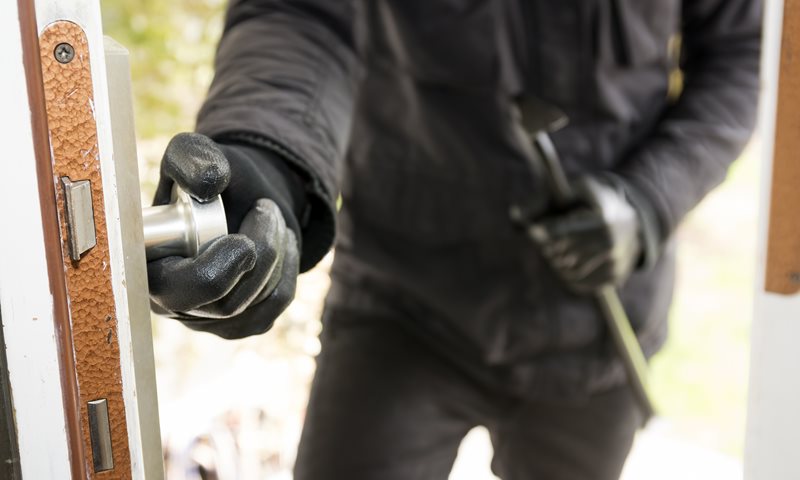
PROPERTY NEWS - Recent SAPS statistics indicate a decline in property-related crime. However, burglaries and house robberies remain a concern for thousands of South Africans each year.
Taking practical steps to strengthen your home’s security can make it less attractive to criminals and provide greater peace of mind.
Dipesh Radia, Chief Commercial Officer at Momentum Insure, says security weaknesses often go unnoticed until an incident exposes them.
“Opportunistic criminals typically look for homes that offer quick and easy access. If breaking in requires time, creates noise, or increases the risk of being seen, they are more likely to abandon the attempt,” says Radia.
He adds that improving home security does not necessarily require expensive technology. Ensuring existing security measures work together, addressing obvious vulnerabilities and removing opportunities can make a significant difference.
Here are six ways homeowners can make their properties less inviting targets.
1. Combine alarms with physical security
Alarm systems, motion sensors and security cameras can provide an important layer of protection, but these systems do not physically prevent someone from entering a property.
Physical barriers such as certified security gates, multi-point window burglar bars and reinforced door frames can create an additional obstacle.
Strong barriers can make forced entry more difficult and time-consuming, while the noise created during an attempted break-in may alert neighbours and provide additional time for an armed response service to react.
“Homeowners should also ensure that digital security components, motion sensors and alarms have a reliable solar or battery backup so that they remain operational during power outages or local grid failures,” says Radia.
2. Invest in quality, verified security barriers
Not all security barriers provide the same level of protection.
Homeowners should investigate the structural strength and independent testing history of security products before installation rather than assuming that every metal gate or security fixture offers the same resistance.
Where possible, look for products made from high-tensile materials and equipped with tamper-resistant locking mechanisms and suitable corrosion protection.
Lightweight or primarily decorative fixtures may provide less protection and should not be relied upon as the sole physical security measure.
3. Improve lighting and remove hiding places
Effective lighting can help eliminate dark areas around a property where criminals could remain concealed.
Consider installing motion-sensor floodlights around entrances, side passages and other vulnerable areas. Battery or solar backup can help keep these lights operational during power interruptions.
Landscaping also plays an important role in home security. Overgrown trees, dense shrubs and tall bushes close to windows and doors can provide concealment.
Keep vegetation trimmed to maintain clear sightlines from inside the home and from the street.
4. Think carefully about walls and climbing aids
High, solid perimeter walls can prevent people outside the property from seeing into the garden or home. However, once someone has entered the property, the same walls can prevent neighbours or passing motorists from seeing what is happening inside.
Radia recommends considering additional anti-climb measures, such as operational electric fencing, palisade extensions or open-view security fencing, where appropriate.
Homeowners should also remove potential climbing aids from around the property.
Ladders, refuse bins and garden equipment should be secured and kept out of sight, as these items could potentially be used to gain access to walls or upper-level windows.
5. Avoid predictable routines when you are away
Criminals may monitor properties to identify patterns in residents’ daily routines.
An apparently unoccupied home, particularly one with permanently closed curtains and no visible activity, can attract unwanted attention.
When away from home, smart timers or remotely controlled plugs can be used to switch lights on and off at different times, creating the appearance of normal household activity.
If you are going away for an extended period, ask a trusted neighbour or house sitter to collect refuse bins and, where appropriate, park a vehicle in the driveway.
Community involvement can also strengthen neighbourhood security. Participating in a local Community Policing Forum or neighbourhood watch can improve communication and awareness of suspicious activity.
6. Get a professional security assessment
Homeowners can easily overlook vulnerabilities on their own properties.
Before spending money on additional security equipment, consider asking a qualified security specialist or armed response provider to conduct a comprehensive assessment of the property.
An expert can identify less obvious weaknesses, such as vulnerable garage access doors, poorly protected skylights or other potential entry points.
This allows homeowners to focus their security budget on measures that address the property’s most significant vulnerabilities.
A layered approach provides greater protection
Effective home security relies on multiple layers rather than a single product or system.
Combining physical barriers, good lighting, clear visibility, technology, secure habits and community vigilance can increase the effort and risk involved in gaining access to a property.
For opportunistic criminals looking for an easy target, making a property more difficult, noisy and visible to enter could be enough to encourage them to move on.
‘We bring you the latest Garden Route, Hessequa, Karoo news’