

Update
MOSSEL BAY NEWS - Concerns about a growing illicit and largely unregulated medicine market in South Africa are increasing among pharmaceutical associations and other related organisations in the country.
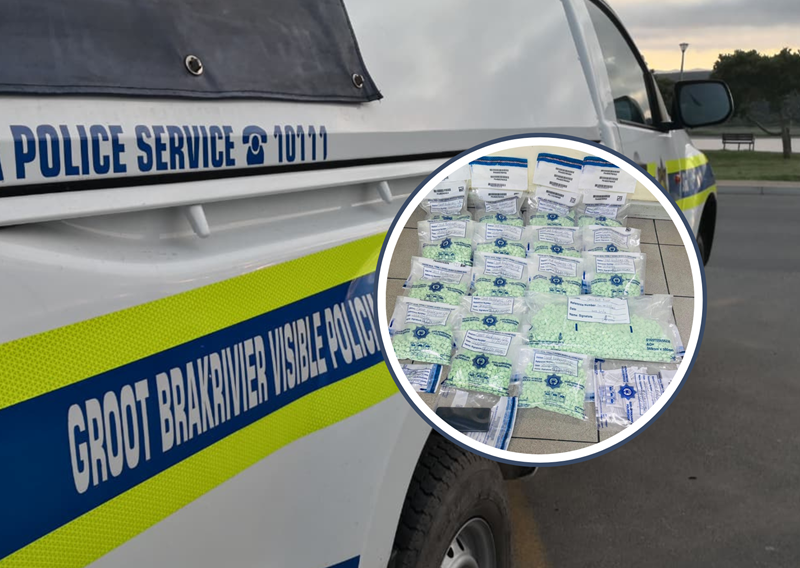
These concerns were emphasised following the recent seizure of 26 000 painkillers in the space of just one month in Great Brak River.
The tablets, believed to be Stilpane and Salterpyn, are both Schedule 5 medications that are only available on a valid prescription from an authorised prescriber.
The 26 000 painkillers were seized in two separate incidents: just over 6 000 tablets were confiscated from a 43-year-old woman on 15 August, while 20 000 were seized from two men on 14 September. Police arrested all three on charges relating to Section 22 of the Medicines and Related Substances Act (MRSA) in their respective cases. They were subsequently released from custody pending the outcome of laboratory tests.
Answering questions from Mossel Bay Advertiser regarding the seizure and where the pills could have come from, Jackie Maimin, CEO of the Independent Community Pharmacy Association (ICPA), said that while it would “be inappropriate to speculate about the source of the medicines in these particular cases while the matter is under investigation ... 20 000 tablets is clearly not a quantity consistent with normal supply to an individual patient”.
She said scheduled medicines, particularly Schedule 5 and 6 medicines, are required to move through a strictly regulated pharmaceutical supply chain, involving licensed manufacturers, wholesalers and authorised healthcare facilities, including community pharmacies.
“Establishing where the tablets recovered in these particular cases originated would require examination of the packaging, batch numbers and relevant procurement and supply-chain records, and it should not automatically be assumed that they originated from a pharmacy or any particular healthcare facility,” said Maimin.
“We are seeing counterfeit and substandard medicines entering the market, as well as scheduled and prescription-only medicines being offered for sale outside legitimate healthcare channels - including online, through social media and, in some instances, at informal outlets such as spaza shops and flea markets.
“Illicit importation or smuggling of medicines is another potential source and cannot be excluded without investigation.”
Prof Renier Coetzee, associate professor at the University of the Western Cape’s School of Public Health, and president of the Pharmaceutical Society of South Africa, said that substandard medications are legally manufactured and approved, but do not meet the required quality standards.
“When a quality problem is identified, the medicine may be recalled from the market. For example, there may be a problem with the amount of active ingredient, the way the medicine was manufactured, or its stability. This is not necessarily intentional,” he said.
Apart from the illicit market, Coetzee said other possibilities as to how a person would acquire 20 000 painkillers like Stilpane were through falsified prescriptions, or a diversion of medicines from the legitimate supply chain.
The South African Medical Association (Sama) said that Stilpane has the potential for dependence and addiction, particularly when it is used regularly, in higher-than-prescribed doses or for prolonged periods.
Coetzee said Stilpane tablets contain paracetamol, codeine, caffeine and meprobamate and that both the codeine, which is an opioid, and the meprobamate carry a risk of dependence and misuse.
Sama said an overdose can be life-threatening.
“It can cause severe sedation, confusion and breathing difficulties, while the paracetamol component can cause serious liver damage. Large overdoses may result in coma or death,” it said. “Dependence is a medical condition and should be treated without stigma.”
Sama also emphasised the need for strong controls to prevent misuse and illegal distribution while still ensuring patients who genuinely require pain medication continue to have appropriate access to treatment.
Vincent Tlala, registrar/CEO of the South African Pharmacy Council, said the council receives many complaints of people accessing Stilpane without a prescription, but in most cases, there is no supporting evidence submitted alongside the complaint.
He said the complainants are encouraged to submit complaints with supporting evidence for the complaint to be dealt with as quickly as possible.
Sama also emphasised the need for strong controls to prevent misuse and illegal distribution while still ensuring patients who genuinely require pain medication continue to have appropriate access to treatment.
Previous articles:
- Great Brak Police confiscate 20 000 painkillers, arrest 2 carriers
- Over 6 000 painkillers found, Great Brak woman arrested
‘We bring you the latest Garden Route, Hessequa, Karoo news’