

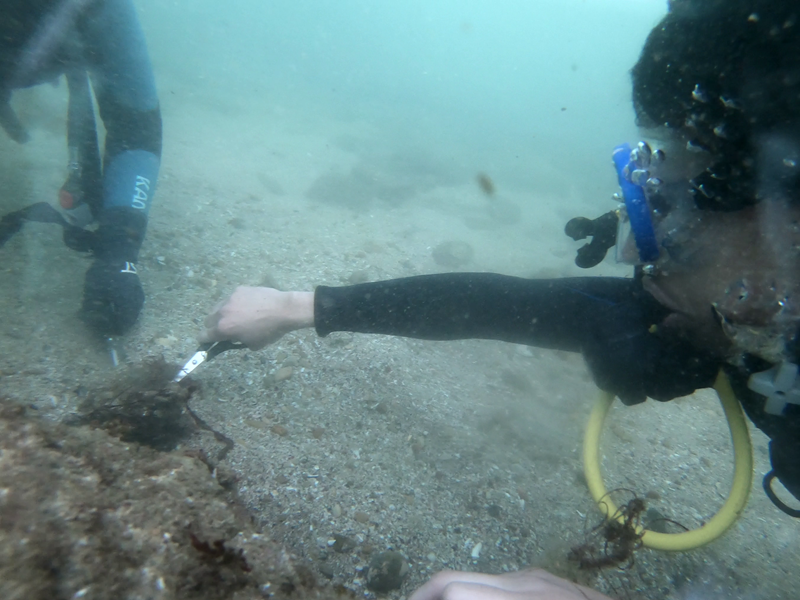
MOSSEL BAY NEWS - A recent clean-up dive in Mossel Bay waters saw the recovery of 215m of fishing line, 54 sinkers and 33 hooks in less than 40 minutes.
This clean-up, which took place near Beacon Point in Mossel Bay on 6 March, was facilitated by Earth Legacy Foundation, in partnership with Go Dive Mossel Bay.
During it, five lures, 51 swivels, three bait slides and 6m of steel trace, which is used when fishing for sharks, were also recovered.
Esther Jacobs of the Earth Legacy Foundation said the clean-up falls under the organisation's Clean Ocean Divers Campaign, but also touches on its Fish Smart Mossel Bay Campaign.
Part of the Clean Ocean Divers programme entails Jacobs giving workshops to divers, which include a lecture on plastic pollution and deep clean-ups.
Then there is the practical side, which teaches divers how to safely remove fishing line from reefs.
Natalie Polly of Go Dive Mossel Bay said during the previous dives, she has seen that fishing line, hooks and sinkers all get wrapped and entangled around the reefs, fish, urchins and crustaceans.
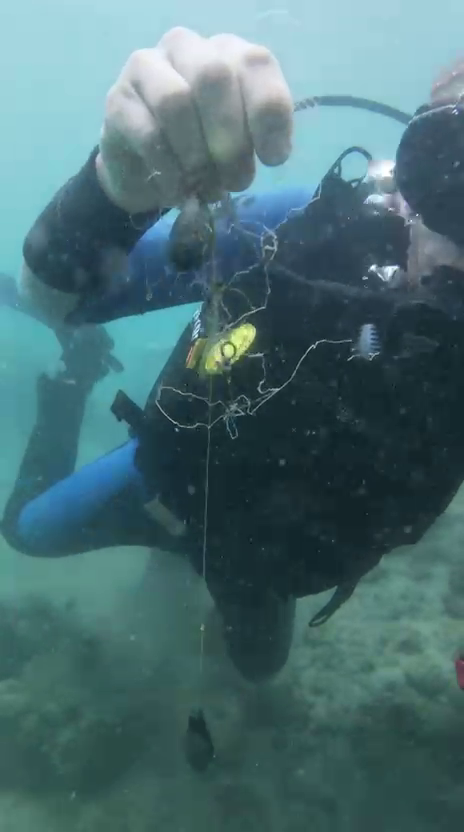 A diver holds up ghost fishing gear recovered during the clean-up on 6 March. Photo: Esther Jacobs
She said they even found an octopus wrapped up in some line, which she and some other divers managed to safely free.
She said the workshops Jacobs runs are extremely important as they teach people how to remove life-threatening ghost gear (a term coined to describe fishing gear lost or left behind by fishermen) while causing as little damage to the reef life as possible.
These clean-up dives occur along parts of the Mossel Bay coast that are hotspots for ghost gear.
Jacobs said the area in which they find the most ghost gear is one she and the other marine conservationists have nicknamed 'Snagger's Rock', which is near Beacon Point, at the bottom of Beach Street. "That whole reef is covered in ghost fishing gear," she said.
She said each time they conduct clean-ups there, she comes across marine life, including mussels and crustaceans, tangled up in fishing line.
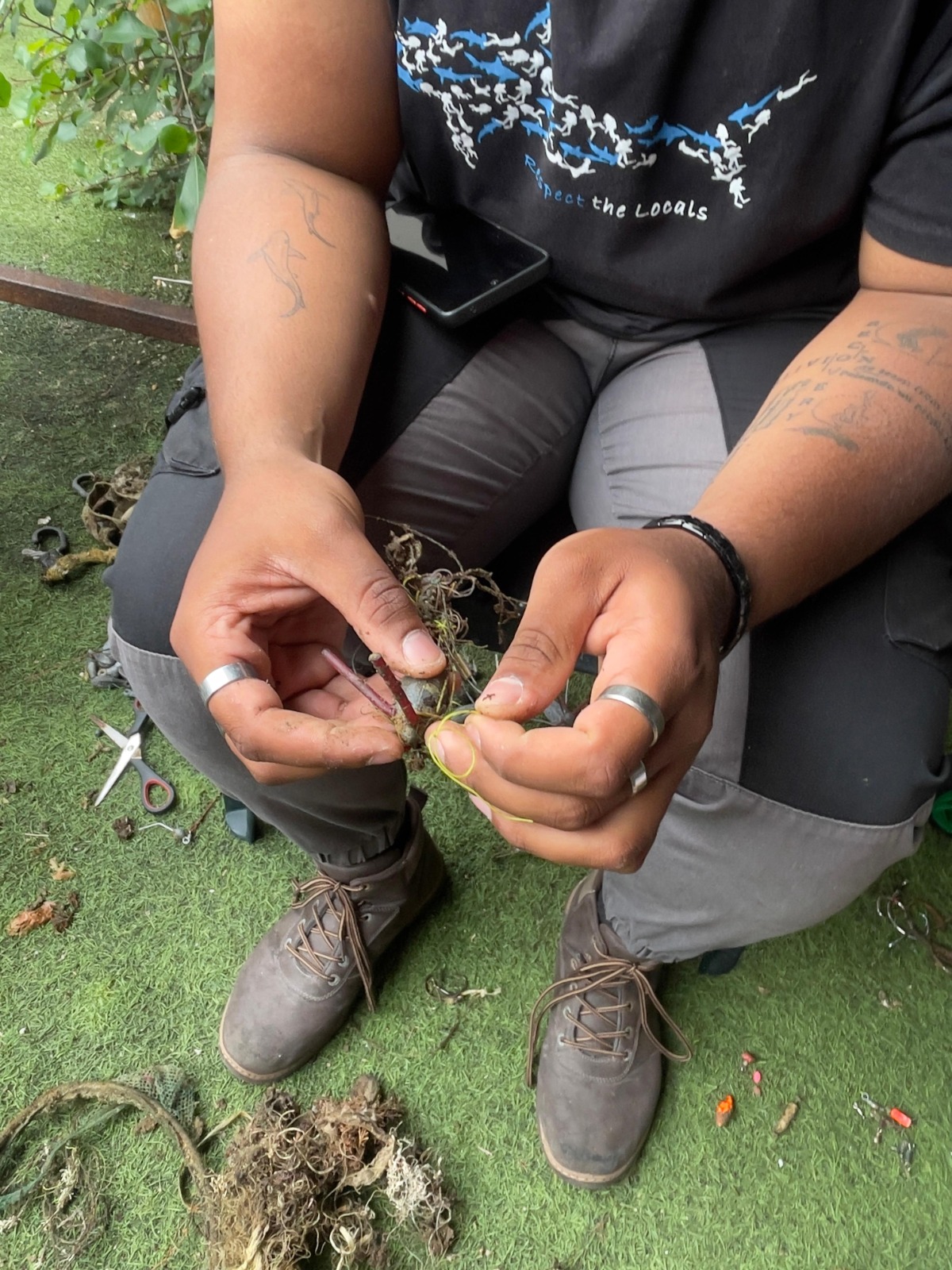 Roman Low of Go Dive Mossel Bay separates a grapnel sinker entangled in multiple lines so the line can be measured. This was taken during a clean-up in December. Photo: Esther Jacobs
Snagger's Rock hosts anglers from a variety of socio-economic backgrounds, and due to the strong currents and abundant reefs, there is a high rate of fishing gear losses.
Jacobs said that through her campaigns, she wants to promote the ethical handling of fish and sustainable fishing, which includes directing fishermen to areas where the snag rate is less, and therefore, not so much gear is lost.
Earth Legacy Foundation's Fish Smart Mossel Bay Campaign states that every year, lost tackle leads to trapped or injured marine life as animals, corals and reef structures are damaged by snagged gear; safety risks for future fishermen diving or fishing in the area; and a drop in fishery's health.
The campaign gives the following advice to fishermen on how to reduce snags and gear loss:
- Use lighter sinkers/weights as far as possible; avoid over-weighting.
- Choose lines/leaders that are abrasion-resistant, but not overly rigid.
- Use circle hooks or single hooks rather than treble hooks where possible.
- Map your drop: know the underwater structure ahead of time (if charts or local advice are available).
The campaign has also offered the following advice on what to do if your gear is lost:
- Mark or remember the spot.
- If safe, retrieve what you can.
- Report it to Earth Legacy so it can remove serious snag zones.
- Dispose of gear properly ashore - don't leave it hanging on structures or floating.
Earth Legacy Foundation's website also suggests several local fishing spots on a handy map, and describes how to get involved with clean-ups and how to report snags and gear loss.
‘We bring you the latest Garden Route, Hessequa, Karoo news’