

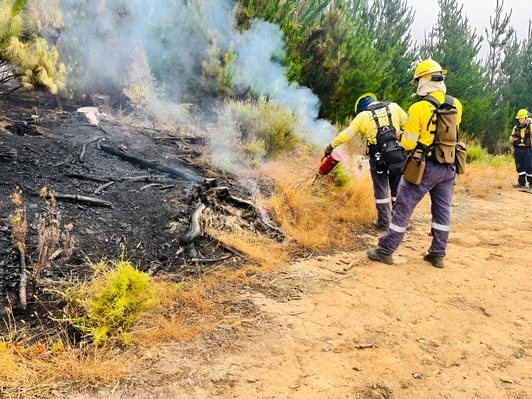
GARDEN ROUTE NEWS - The 2025/26 summer fire season has been described as one of the most challenging in recent years, with a sharp rise in fire incidents, extreme weather conditions and vast areas of land affected across the Garden Route and the broader Western Cape.
Early surge in fires before official season
The Garden Route District Municipality’s fire chief, Deon Stoffels, said the region had already experienced a heightened number of veld and mountain fires before the official fire season, which typically runs from 1 December to 31 March.
From 1 August to 30 November last year, a total of 66 fires were recorded across the district.
Stoffels attributed many of these to poorly executed prescribed burns during winter and spring, as well as drought conditions and unpredictable winds.
“Unskilled and inadequately implemented prescribed burning practices caused a significant number of these fires,” he said.
He said lightning strikes in mountainous areas also contributed.
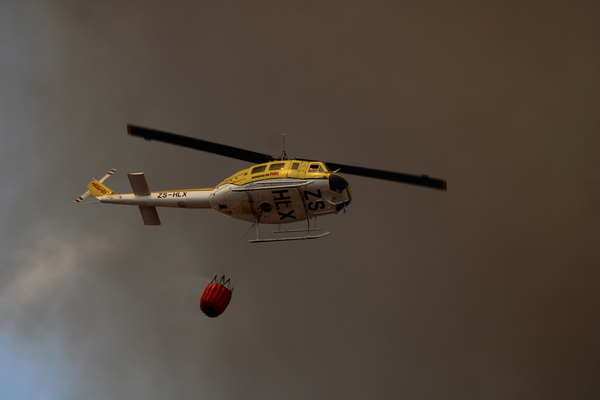 A helicopter fights a tough battle in Mossel Bay earlier this year. Photo: Linzetta Calitz
Hundreds of fires recorded across district
Between 1 August and 28 April, 127 fires were recorded across the district, affecting areas such as Bitou, Knysna, Oudtshoorn, George, Mossel Bay, Kannaland and Hessequa.
These include last year’s Albertinia wildfire in December, the destructive Aalwyndal inferno in Mossel Bay in January, and the Heidelberg mountain fire, which burnt about 5 200ha.
A fire in the Lategansvlei near Oudtshoorn in mid-December spread over 4 200ha within hours.
These incidents show the impact of drought conditions, high fuel loads like alien invasive plant species, and strong winds when fires are not properly managed.
Landowners urged to act after fires
After a fire, a lot of the dry plants and bushes that would normally burn are gone, which means there is less fuel for another fire for a while.
However, this doesn’t last. New plants, especially invasive ones, grow back quickly, and if landowners don’t clear them and keep proper firebreaks in place, the area can become a fire risk again.
Stoffels stressed that fighting and preventing fires takes co-operation between municipalities, conservation bodies, government departments, firefighting teams and landowners to keep communities safe.
Season started earlier, burnt hotter
CapeNature says the fire season across the Western Cape began with exceptional intensity.
Between September and the end of November, they responded to 43 fires, and 31 were recorded in October and November alone.
The Western Cape Minister of Local Government, Environmental Affairs and Development Planning, Anton Bredell, described the season as particularly difficult due to hot, dry and windy conditions that extended into autumn.
However, CapeNature highlighted the effectiveness of firebreaks and co-ordinated efforts between firefighting teams and communities, which helped prevent loss of life and infrastructure in certain areas.
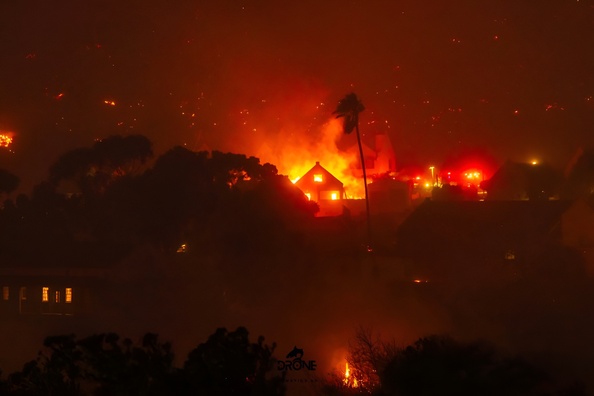 Flames destroyed parts of Aalwyndal in January. Photo: Drone Fanatics
Most fires this season were caused by human activity.
Even small ignition sources, such as braai fires or discarded cigarettes, could lead to major fires under the current conditions.
Above-normal temperatures and below-normal rainfall are predicted for March to May, extending the fire risk beyond the traditional season.
‘We bring you the latest Garden Route, Hessequa, Karoo news’