

Gallery
NATIONAL NEWS - On International Bat Appreciation Day, attention turns to one of nature’s most overlooked yet essential species and the critical role they play in ecosystems worldwide.
Bats are often associated with fear and superstition, cast as villains, when in reality they are nature’s unsung heroes.
As keystone species, they are vital to global ecological health, helping to enhance biodiversity, and deliver services that support human health, African economies, and rural livelihoods.
- Pest control: A single insect-eating bat can consume 500 to 1,200 insects in one night, including agricultural pests and disease carriers. This helps regulate insect populations, reduce crop damage, and limit the spread of insect-borne diseases.
- Seed dispersal: Fruit-eating bats help regenerate forests by spreading seeds over long distances, often moving them away from parent trees. This reduces competition, supports forest recovery, and maintains plant diversity.
- Pollination: Nectar-feeding bats are important pollinators of wild plants, supporting biodiversity and resilience. They also pollinate economically important crops such as bananas, guava, durian, cashews, dates, figs, cacao, sugarcane, corn, cotton, and are the main pollinator of agave (used to make tequila).
- Nutrient cycling: Bat droppings (called guano) is a natural fertiliser that recycles nutrients such as nitrogen, phosphorus, and carbon. It supports cave and forest life and enriches surrounding soils, boosting plant growth.
Bats are not only ecosystem engineers but also vital to economies and food security. Their ecological services reduce the need for chemical pesticides, helping farmers lower costs and improve the resilience of key crops such as cacao, maize, cotton, and nut-producing trees.
Beyond agriculture, bats also support broader economic stability by maintaining healthy environments that underpin subsistence farming and forest-based jobs and income.
In South Africa specifically, bats provide important protection for macadamia orchards, the world’s largest macadamia-producing region. A 2018 study in Ecosystem Services estimated that bats protect 0.53%–1.29% of annual macadamia production by feeding on stinkbug pests.
This translates into avoided losses equivalent to 9%–23% of pest-related damage costs.
With stinkbug damage estimated at around R11,000 per hectare, this represents a significant saving per hectare through natural predation. Without bats, annual losses for growers could be even higher.
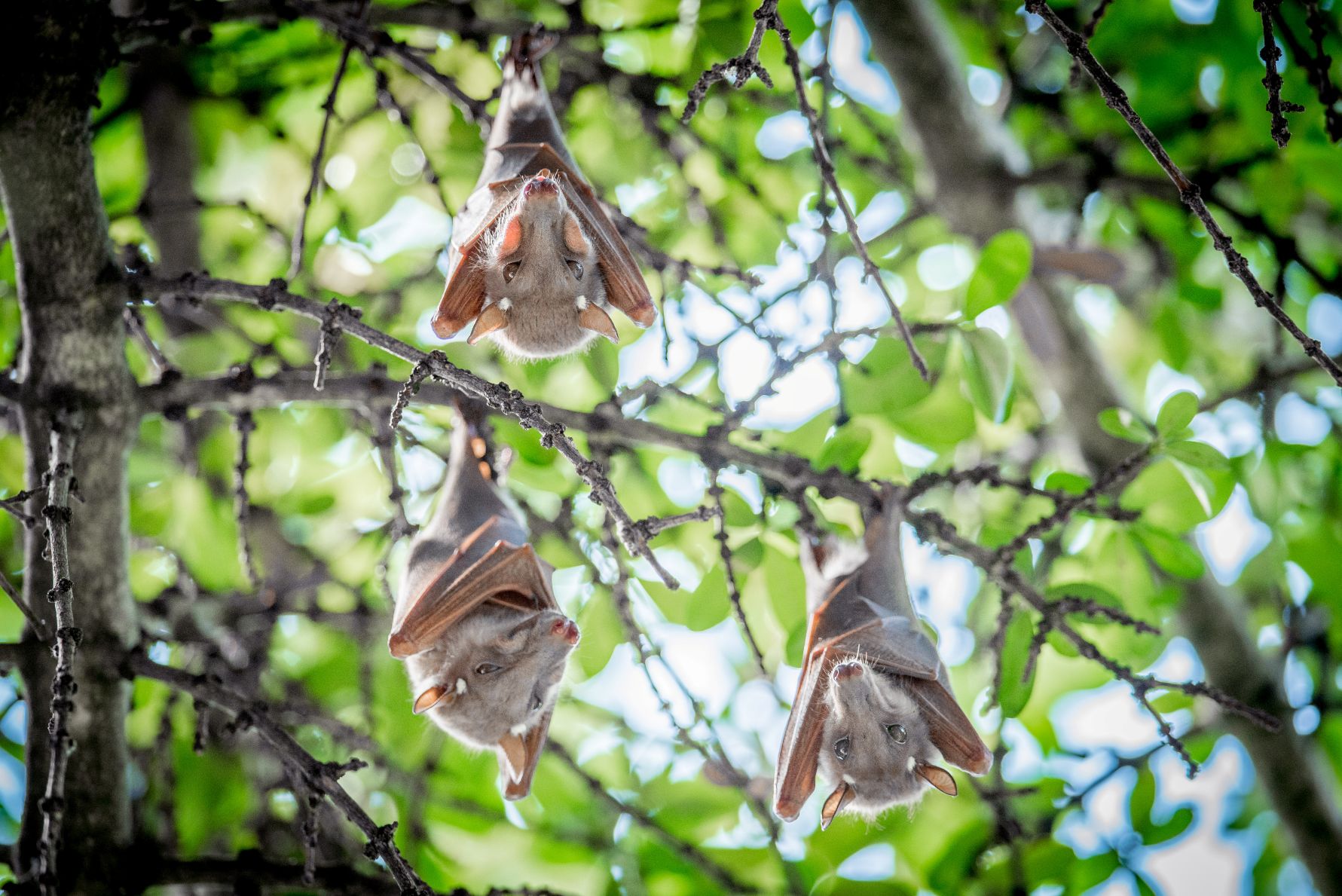 South Africa Peters Epauletted fruit bats hanging in a tree. Photo: Supplied
Sadly, myths about bats continue to fuel fear, leading to persecution and the destruction of vital species.
Here are five common misconceptions, debunked:
- Myth: Bats are bloodsucking vampires
Fact: Only three species out of 1,500 bats feed on blood, and all are found in the Americas. There are no vampire bats in Africa. The vast majority feed on insects, fruit, nectar or small animals.
- Myth: Bats are evil or bring bad luck
Fact: This perception is rooted in folklore, not science. In reality, bats are vital to ecosystems and, in many cultures, are actually symbols of good fortune and longevity.
- Myth: Bats are aggressive and get tangled in your hair
Fact: This is a persistent myth, but bats are incredibly agile flyers. They are shy and actively try to avoid humans, so flying into your hair would be extremely unlikely.
- Myth: Bats are dirty and disease-ridden
Fact: Bats are clean animals that groom themselves regularly. Like all wildlife, they can carry diseases, but the risk to humans is extremely low when they are left undisturbed. By consuming vast numbers of insects, bats can even help reduce the spread of insect-borne diseases.
- Myth: Bats are pests that cause destruction
Fact: Far from being pests, bats are essential to healthy ecosystems. In fact, they play a critical role in controlling pest populations, by eating insects, saving farmers billions in crop damage and pesticide costs each year.
Bats have existed for more than 50 million years. With the discovery of the world’s 1,500th bat species last year, they represent the second-largest order of mammals after rodents, accounting for around 20% of all mammal species.
They are found on every continent except Antarctica, with Africa home to an estimated 200 to 250 species. South Africa is rich in bat diversity, with around 70 to 75 species recorded, making bats one of the country’s most diverse mammal groups. These include the Peters’s Epauletted Fruit Batt, Wahlberg's epauletted fruit bat, little free-tailed bat and Cape serotine.
Bat populations are declining rapidly. According to IUCN Red List assessments, approximately 24% of bat species are threatened or near threatened with extinction, including 31 species classified as Critically Endangered, 93 as Endangered, and 119 as Vulnerable.
Habitat loss and degradation remain the most significant threats to bats, driven by the expansion of agriculture, logging, and urbanisation, which destroy critical roosting, breeding, and feeding habitats. In particular, the loss of forests and caves can have severe impacts on bat populations.
Additional threats include poisoning from toxic pesticides, collisions with wind farms, disease outbreaks such as White-nose syndrome, which has caused population declines of up to 90% in some species, and human persecution driven by fear and misunderstanding. Globally, at least 19% of bat species are impacted by hunting for bushmeat.
Peter Knights OBE, CEO of Wild Africa, says, “Far from being scary or evil creatures, bats are our allies, not our enemies. As keystone species, they are essential to the health of our environments, economies, and livelihoods. Their survival is inseparable from our own, and they deserve greater understanding and protection.”
Protecting bats protects us all. This International Bat Appreciation Day, we can help shift perceptions by sharing accurate information and strengthening efforts to conserve these iconic species.
‘We bring you the latest Garden Route, Hessequa, Karoo news’