

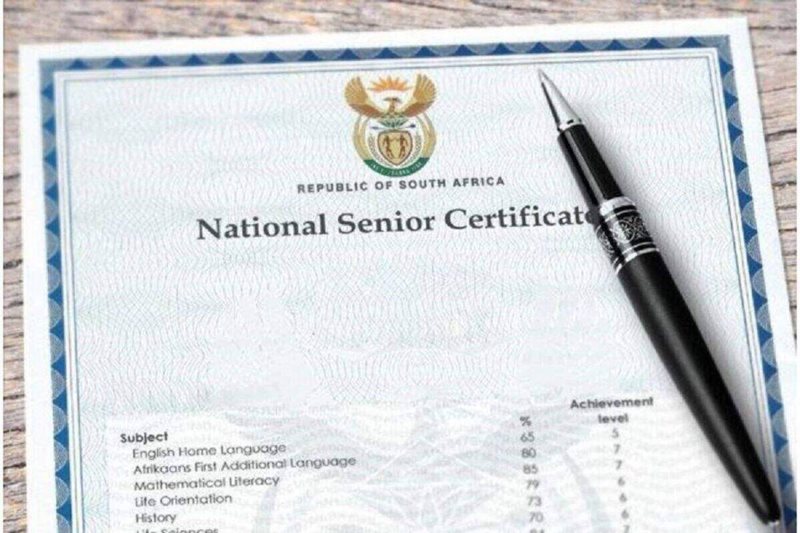
SCHOOL NEWS - As the Class of 2025 celebrates its matric results, South Africa is again facing a problem that has little to do with learner performance and everything to do with system capacity, warn education experts.
In 2025, over 900,000 learners wrote the National Senior Certificate examinations. With a national pass rate of 88%, more than 656,000 learners successfully passed – one of the largest cohorts of successful candidates the country has produced.
But while the results point to real progress in basic education, they also bring renewed pressure to a system that has not expanded at the same pace, with the gap between school outcomes and post-school capacity becoming painfully evident each January.
This is according to Leon Smalberger, Chief Executive Officer of the Academic Institute of Excellence (AIE), an accredited private higher-education institution operating across engineering, technology, design, and applied sciences.
Smalberger states that South Africa’s post-school education system lacks sufficient capacity or the right mix of pathways to absorb learners.
“South Africa’s learners are more than capable, with immense potential that consistently goes unrealised or undeveloped as a result of a persistent systemic mismatch at the post-school level. There are simply not enough viable places for them to continue their studies in a way they can realistically complete.”
In September last year, Minister of Higher Education and Training Buti Manamela reported that for the 2026 academic year, South Africa is projected to offer approximately 535,000 first-year places across public universities, TVET colleges, and community colleges combined. This includes around 235,000 first-year spaces at public universities, with the balance spread across TVET and community college pathways.
The gap between the number of learners who pass matric and the number of available post-school places leaves an estimated 121,000 successful matriculants without an immediate place in the public system. But the pressure is most visible at the university level, given that some 345,000 learners passed with a bachelor’s pass.
In the previous academic cycle, approximately 337,000 learners achieved a bachelor’s pass, yet only about 235,000 first-year university spaces were available nationally. While not every matriculant is expected to pursue a degree, the figures demonstrate the constraints facing the university sector in particular.
Access alone is not enough
Even for those who secure a place, progression remains a concern. In late 2025, Gauteng Education MEC Matome Chiloane cautioned that around 35% of students fail to progress beyond their first year of study, often due to financial pressure, accommodation shortages, transport costs, and poor institutional fit rather than academic ability.
“This is where the national conversation needs to confront the hard truths,” adds Smalberger. “Our system is failing our students by limiting capacity and by not supporting them effectively through to completion. We need to question whether institutions are structurally equipped to take students from enrolment to qualification in a sustainable way, and whether students are being equipped with the right skills for successful futures.”
For example, he argues that South Africa’s post-school challenge cannot be solved by university expansion alone. Global trends point to a growing shift towards specialised, skills-based qualifications such as diplomas, higher certificates, and occupational programmes, especially in fields such as engineering, technology, data, design, and applied trades.
“At a national level, we need a diversified system that values different forms of post-school education. Well-designed vocational and technical pathways are not alternatives of last resort, but instead central to economic participation and skills development.”
The capacity debate should also force a rethink of how education is delivered. Campus-only models, while valuable, remain expensive and geographically restrictive at scale. Rising accommodation costs and transport barriers make exclusive reliance on physical campuses increasingly difficult to sustain.
By contrast, hybrid learning models that combine in-person practical training with structured online delivery can expand access while maintaining quality and oversight, he says.
“Flexible delivery marks a vital step forward in terms of removing unnecessary barriers so that capable students can both study and work without being priced out.”
Making informed choices in a crowded landscape
As placement pressure peaks each January, experts caution against panic-driven decisions and urge matriculants and parents to take a measured approach when evaluating post-school options.
“South Africa has a diverse post-school ecosystem, and learners are often better served by exploring the full range of accredited pathways available to them,” says Smalberger. “The key is to make informed, comparable choices rather than defaulting to a single route.”
He advises families to verify that any institution they consider is properly registered with the Department of Higher Education and Training and that its programmes are accredited by the Council on Higher Education, aligning with the National Qualifications Framework.
“These checks are essential to ensuring that a qualification is recognised, transferable, and relevant in the long term. In a system under pressure, informed decision-making becomes one of the most important tools learners have to protect their futures.”
‘We bring you the latest Garden Route, Hessequa, Karoo news’