

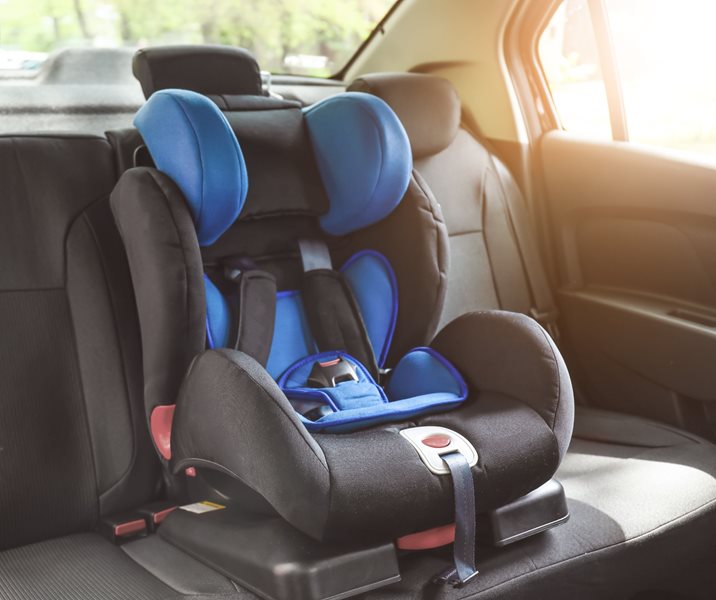
NATIONAL NEWS - Every time a child travels in a vehicle without an appropriate restraint system, their life is needlessly placed at risk. Car and booster seats are not optional accessories, but essential precision engineered safety devices, designed to protect young passengers according to their age, weight and developmental stage.
Yet, despite the evidence and legal requirements, far too many children on South African roads continue to travel unrestrained or improperly secured, increasing the risk of fatality or lifelong injury during an accident.
A recent study by the Road Traffic Management Corporation (RTMC), highlights that Regulation 213 of the National Road Traffic Act (NRTA) mandates that infants must be secured in an appropriate Child Restraint System (CRS) when travelling in a motor vehicle.
However, this provision notably excludes public transport vehicles such as minibus taxis, minibuses or buses, a gap that stands in direct contradiction to the fundamental principles of child safety.
This regulatory inconsistency leaves thousands of children who rely on public transport without adequate protection, underscoring the urgent need for more inclusive and equitable approaches to road safety legislation.
This gap in protection is deeply concerning, particularly as road trauma remains one of the leading child health crises in South Africa. According to RTMC data, children aged 0-14 years account for 10.2% of road fatalities.
In 2024 alone, an estimated 1,145 children in this age group lost their lives on South African roads, a sobering reminder of how disproportionately the youngest and most vulnerable are affected by lapses in safety compliance and enforcement.
Safety, especially for children is not a privilege, it is a fundamental right. A child’s chance of surviving a crash should never be determined by their family’s economic bracket or mode of transport. If properly certified, car seats are proven to significantly reduce the risk of death and injury, which means ensuring universal access and enforcement become a shared responsibility across both public and private sectors.
Every mobility system must be designed with the vulnerable in mind and their protection at the core. Where private ownership and solutions fall short, public policy, transport operators and industry partners must step in to close the gap.
High-stakes: Why correctly securing children is non-negotiable
Data continues to affirm what safety experts have long emphasised.
The correct use of CRSs is one of the most effective measures for preventing serious injury and loss of life. According to the RTMC, the use of properly certified CRSs can reduce mortality rates by 70% for infants (birth – 12 months) and 50% for toddlers aged 1-4 years.
The World Health Organisation (WHO) has echoed the same view, noting that properly installed car seats lower the risk of children being injured in road traffic collisions.
Research from the Red Cross War Memorial Children’s Hospital in Cape Town, which treats close to 300 children annually involved in motor vehicle accidents, further illustrates the human cost of non-compliance: 80% of children who were admitted with severe head injuries following motor vehicle accidents were completely unrestrained, while 96% of them were improperly harnessed at the time of impact.
Complementing this, is a study published in the International Journal of Environmental Research and Public Health in 2020, supported by findings from the AA, which revealed that fewer than 7.8% of South African children travel in vehicles correctly restrained.
These statistics expose not only a public safety failure but a societal one, a lack of awareness, affordability, and enforcement, which places thousands of young lives at great risk each year.
AA leads the call: Universal road safety and compliance for every journey
As South Africa’s leading authority on road user safety and mobility, the AA continues to champion child protection as a non-negotiable pillar of national road safety. Underscoring that, no journey is safe unless every passenger, especially children, are secured using equipment that meets the highest safety standards.
Under current legislation, all seatbelts and CRSs must comply with South African Bureau Standards (SABS) specifications. SABS 1080 for adult occupants and SABS 1340 for children. These standards are designed to ensure that seatbelts, buckles and CRSs perform reliably under impact, reducing injury severity and saving lives.
For the AA, this represents a clear and urgent safety gap, which should not only end at current legislation, but should consider international best practices. Children who rely on public transport deserve the same level of protection as those travelling in private vehicles.
By foregrounding the importance of SABS approved equipment, the AA aims to empower families to make informed purchasing decisions, while urging industry stakeholders to uphold, consistently enforce and improve safety standards.
The life-saving benefits of car seats and boosters are undisputed; however, their true value is realised only when supported by strong regulatory framework.
Standards and certifications serve as the backbone of safety, ensuring that every restraint system on the market has undergone rigorous testing and meets at the very least, the minimum performance benchmarks for crash protection.
In South Africa, that framework is built around the SABS standard for CRS, a critical reference point for manufacturers, retailers and consumers alike. These standards are not optional; they form a legal minimum baseline for safety equipment in motor vehicles.
The AA guide: Choosing the right car seat
Selecting a child car seat is a safety investment. The AA advises consumers to prioritise and make these considerations when selecting and installing a CRS:
- Certification/Standard Compliance: Always check that the model is at least SABS 1340 certified.
- Child size: Match the seat to your child’s height, weight and developmental stage from rear-facing for infants and children aged 0-7 years to forward-facing for children aged 7-8 years and boosters for older children up to the age of 12.
- Vehicle Compatibility: Ensure the seat fits your car’s seatbelt system or ISOFIX anchors. Poor fit compromises protection.
- Secure Installation: A properly installed seat should not move more than 2-2.5cm side-to-side or front-to-back.
- Build Quality and Safety Features: Prioritise seats with energy absorbing shells, robust side-impact protection and secure restraint systems such as top tether, a 5- point harness or correctly fitted 3-point or lap belts that adjust as your child grows.
- Comfort and Practicality: Safety must be sustainable, therefore ease of use is such as quick buckle, access is key, particularly in South Africa.
- Expiry, History and Replacement: A consideration often overlooked, is that seats degrade over time and after impact. Always check the manufacturing date and quality (fit for purpose).
Top-rated child car seats in South Africa
The AA is of the view that, every child deserves a properly certified restraint and urges parents to consider engaging with research by qualified car-seat technicians and trusted independent testing when deciding on a car seat or booster.
Assessments by Car Seat Technicians Robyn Hunt and Julie Monson, suggest that parents should consider car seats and boosters that achieve strong results in ADAC evaluations and the Swedish Plus Test (the world’s only crash test measuring neck-load forces in frontal collision, conducted by the Swedish National Road and Transport Research Institute – Statens väg - och transportforskningsinstitut (VTI) such as:
All of these car seats are available in the South African car and booster seat market.
Building confidence: Making every family safer on the road
South Africa’s SABS standards exist not only to ensure regulatory compliance but gives parents and caregivers confidence in the safety of the products they rely on. This is where the AA continues to play a pivotal role, translating complex safety standards into clear practical guides families can trust.
Through sustained advocacy, public awareness campaigns, expert resources, partnerships with regulators, manufacturers and certified car technicians, the AA consistently reinforces one message: an approved and tested seat, correctly installed remains one of the most effective protections a child can have on the road.
Independent global tests, including the Swedish Plus Test, which no forward-facing seat has ever passed due to dangerously high neck-loading and ADAC crash evaluations underscore the lifesaving value of rigorously engineered car seats.
These findings mirror the AA’s long-standing position, that children must travel in certified, properly fitted restraints that meet the highest possible safety standards available to them.
As South Africa confronts an urgent child road-safety crisis, the path forward is clear. Regulators, industry and caregivers must work together to expand access, strengthen awareness and ensure that every child, in every vehicle is properly protected.
The AA calls on all sectors, public and private to prioritise child safety, close the gaps in our transport systems and make secure compliant travel a non-negotiable standard for every family.
‘We bring you the latest Garden Route, Hessequa, Karoo news’