

GARDEN ROUTE | KAROO NEWS - Still Bay, Western Cape - What if anyone could help scientists build a living map of nature simply by taking photographs with their phones?
That is the idea behind the Great Southern Bioblitz [GSB] - an annual international event that brings people across the Southern Hemisphere together to document plants, animals, birds, mammals, and other forms of life using the free iNaturalist platform.
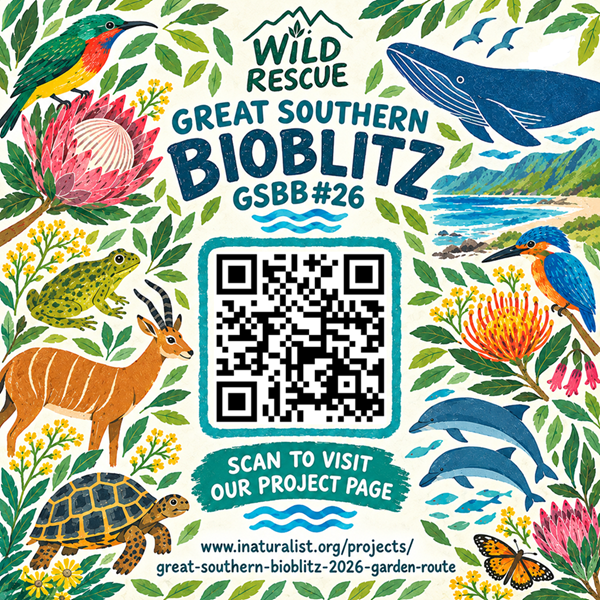
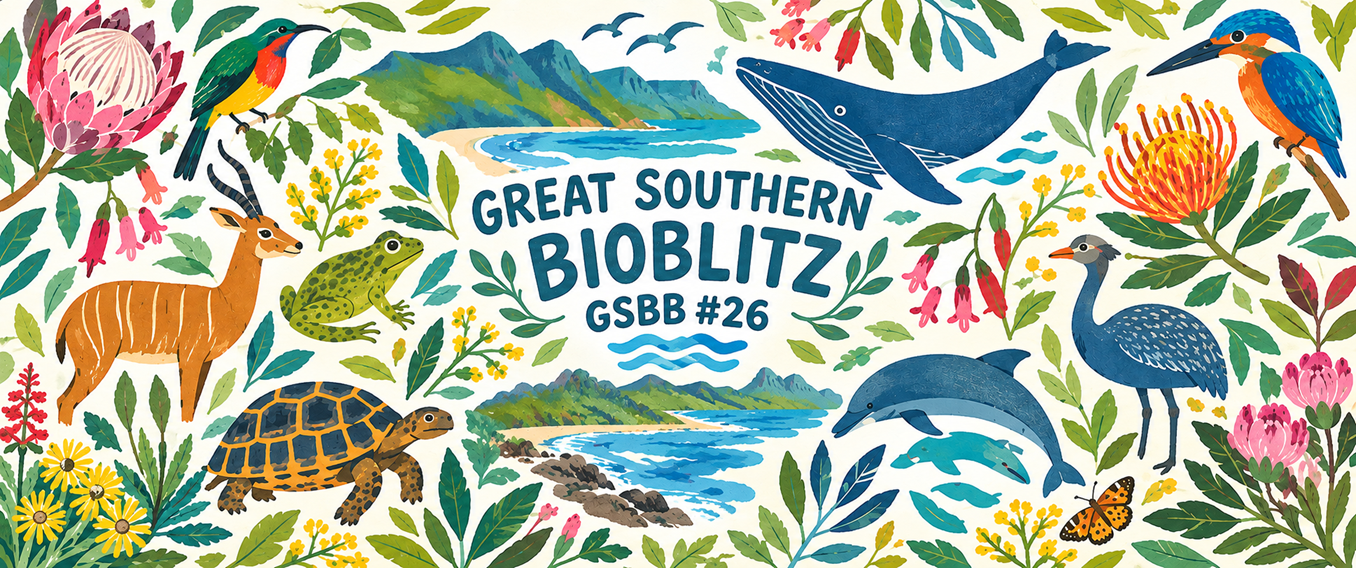
This year, the Great Southern Bioblitz takes place from 27-30 November, and Wild Rescue nature reserve is driving the campaign as an organiser for the verdant Garden Route area.
Wild Rescue will be rallying individuals, communities, schools, conservation organisations, nature-oriented groups, and other institutions across the region to get onto iNaturalist, get outdoors, and help create a detailed record of the natural world, during the four-day bioblitz and beyond.
Anyone with a smartphone can take part by photographing the living things in their vicinity and uploading the images to iNaturalist, the biodiversity-recording app that powers the event. Every photograph uploaded becomes a verifiable data point: what was seen, where, and when. Multiplied across tens of thousands of participants, these points help build a picture of a region's biodiversity.
We cannot protect what we do not know is there. South Africa is one of the world's most biologically diverse countries, but our knowledge of that biodiversity is constantly in flux.
Species distributions change, habitats are transformed, invasive species spread, populations decline, and at the same time, new species and previously overlooked populations continue to be discovered. Every properly documented observation adds to our understanding.
iNaturalist allows people to photograph an organism, record where they encountered it, and upload the observation. Other members of the iNaturalist community can then suggest or confirm an identification. Over time, these observations become a valuable research-grade dataset.
The South African National Biodiversity Institute [SANBI] has recognised the value of this citizen-generated information and is extensively involved in iNaturalist in South Africa. SANBI is South Africa's national focal point for the platform, and its Threatened Species Programme includes citizen-science work and the management of iNaturalist as part of its biodiversity monitoring activities.
The importance of this data is not merely theoretical. iNaturalist information contributes directly to Red List assessments and land-use decision-making, while keeping track of species of conservation concern.
The data can also reveal things that conventional surveys miss. In SANBI's 2024/25 reporting, the Custodians of Rare and Endangered Wildflowers [CREW] programme - another major citizen-science initiative - recorded three plant species new to science and rediscovered four plant species that were thought to be extinct in the wild. These discoveries demonstrate why getting more eyes on the landscape matters.
A Four-Day Snapshot With Lasting Impact
Launched in 2020 by a small group of Australian citizen scientists - during the depths of the COVID-19 pandemic and in the aftermath of devastating bushfires - the GSB has grown from a single-country experiment into a Southern Hemisphere-wide movement. In its first year, roughly 3,000 people across 12 countries generated over 91,000 observations of more than 12,400 species. By 2023, that had swelled to 7,238 participants across 203 regions on three continents, logging 231,040 observations of 26,062 species - including 1,307 species of conservation concern.
South Africa consistently punches far above its weight. In 2023, southern African regions claimed six of the top ten spots worldwide for observations, five of the top ten for species recorded, and three of the top ten for number of observers. In 2025, South African participants alone contributed 103,380 observations of 12,434 species - more than any other country, outpacing even Australia, where the bioblitz began, and over a third of all observations recorded globally that year.
The Western Cape led the country's provinces with over 26,000 observations of more than 3,000 species, and the neighbouring Overstrand district logged over 15,000 observations alone - the most of any single region on earth that year.
This isn't a new phenomenon for South Africa. The country was the fifth in the world to pass one million observations on iNaturalist, reaching that milestone back in September 2020 - trailing only the United States, Mexico, Canada, and Australia.
In 2025, the global event generated 282,261 observations of 37,550 unique taxa from 9,993 observers. The Great Southern Bioblitz has continued to grow dramatically. In 2026, projects for this event are being organised broadly across Africa, Australia, Oceania, and South America.
The 2022 Southern African bioblitz alone produced 97,988 observations representing 9,738 species, with 1,581 observers and 1,406 identifiers contributing to the effort. The Garden Route was particularly prominent, ranking among the leading regions internationally for both observations and species recorded. These numbers show that citizen science is not just a recreational activity. Collectively, thousands of individual observations can become a meaningful source of information.
The data collected isn't symbolic; it feeds directly into scientific and conservation work. Citizen observations have also rewritten the record books. In the Western Cape - within 150km of the Garden Route itself - a geometrid moth, Drepanogynis insciata, thought extinct for 147 years, was rediscovered between 2020 and 2023 purely through photographs uploaded to iNaturalist, later confirmed and published in the scientific literature. It's one of dozens of South African species, from moths to fynbos plants presumed extinct for over a century, that ordinary observers have helped bring back from the annals of the lost.
How to Get Involved in the Great Southern Bioblitz 2026
Participation is free, open to anyone in the Southern Hemisphere, and requires no expertise:
Download the free iNaturalist app (iOS or Android) and create an account.
Between 27 and 30 November, photograph any wild plant, animal, fungi, or other living organism encountered.
Upload observations to iNaturalist. Participants then have 14 days to finish uploading and help identify what's been recorded.
Observations can be linked to the Great Southern Bioblitz 2026 - Garden Route project, or the wider Southern Africa umbrella project, both live now on iNaturalist. No prior identification skill is needed; the platform's community of experts and AI-assisted tools help put a name to almost anything.
Wild Rescue brings the Bioblitz to the Garden Route
For the 2026 Great Southern Bioblitz, Wild Rescue wants to help make participation accessible to everyone, wherever they are - whether they’re already an experienced naturalist or someone who simply enjoys taking photographs of beautiful and fascinating things they find outdoors.
During the bioblitz, Wild Rescue will host practical iNaturalist workshops on Saturday 28 and Sunday 29 November at their nature reserve.
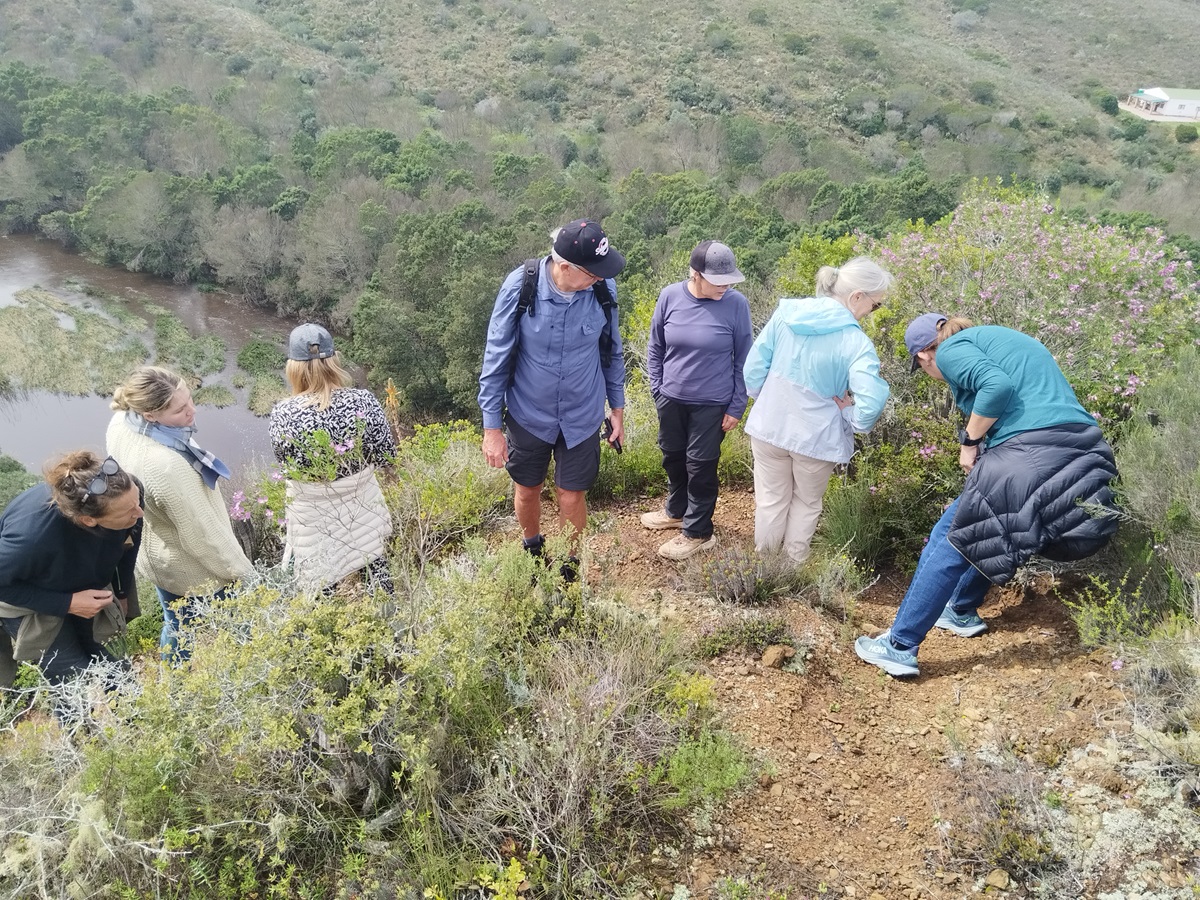
Participants will learn how to use the platform before heading out onto the reserve’s walking trails to photograph and record the biodiversity they encounter. Wild Rescue's team will assist participants with uploading observations and getting them identified.
All participants need to bring is a smartphone with the iNaturalist app already installed. Further information about times, bookings, and participation arrangements will be announced on the reserve’s social media closer to the event.
Says Gill Simpson, founder and director of Wild Rescue, “For our organisation, the Great Southern Bioblitz is about more than competing for numbers with other regions. It is an invitation to look more closely at the landscape we call home. A protea on a mountainside. A beetle beneath a stone. A mushroom after the rain. A bird in a home garden. A lizard basking beside a path. A flower in a park. A plant that looks ordinary but, maybe, turns out to be rare. Every one of these encounters is part of the extraordinary biodiversity of the Garden Route, beginning right here in the Hessequa area. By recording those encounters, people can provide information that can help researchers understand where species occur, identify changes and gaps in our knowledge, and make better-informed conservation decisions.”
Got a Smartphone? Get outside and go wild! You can help map South Africa’s biodiversity.
‘We bring you the latest Garden Route, Hessequa, Karoo news’