

Update
MOSSEL BAY NEWS - Since the beginning of this year, five seals have tested positive for rabies in the Western Cape; three of these in Mossel Bay.
The adult female Cape fur seal captured at The Point on 9 April has officially tested positive for rabies, according to a statement by the Stranded Marine Animal Rescue Team (Smart) on its Facebook page on 17 April.
The Western Cape Department of Agriculture confirmed the positive test yesterday, 22 April.
The seal was originally spotted on the rocks at The Point on 3 April, showing clinical signs of a respiratory problem. It was monitored for several days by Smart's volunteers.
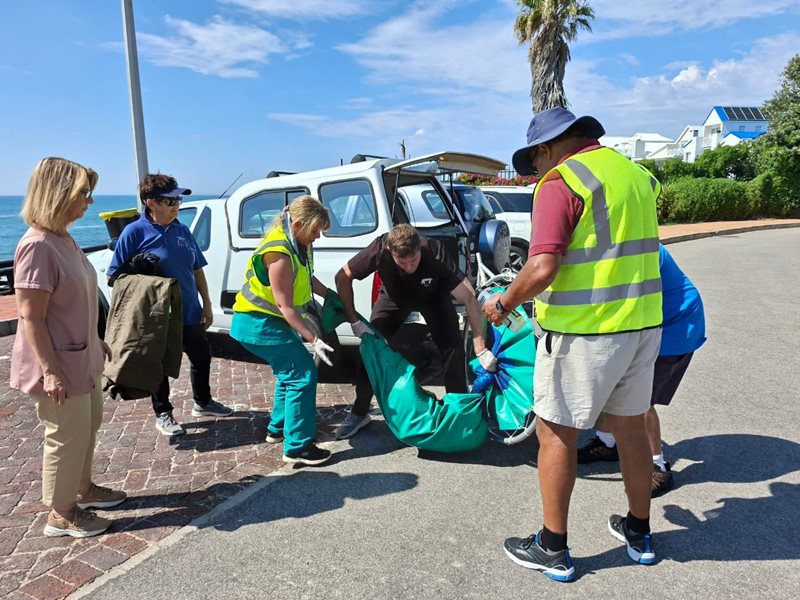
Sr Stefanie de Graaff, Christie de Graaff and Robert Pinkhard of the Hartenbos Animal Hospital went out to The Point on 9 April.
While the seal showed no visible clinical signs of neurological disease, she did show clinical signs of a respiratory problem, had laboured breathing and was uncomfortable lying on her sides.
They captured the seal and took it to the Hartenbos Animal Hospital where she was humanely euthanised due to her dire condition and to prevent her from further suffering.
Some samples were then sent to the state veterinarian to test for rabies and avian influenza. The rabies test came back positive.
On 14 April, the department had responded to Mossel Bay Advertiser queries about the situation, stating that from the beginning of this year, altogether seven seals have been tested for rabies in the Western Cape, and of these, four were positive.
With this latest result with the Point seal, however, the number is now five.
"Rabies in seals is an emerging and evolving situation along the Western Cape coastline," said the department's spokesperson, Mary James, in the department's answer.
"Members of the public are strongly advised not to approach seals, especially those that appear aggressive, disoriented or unusually tame."
If a seal is encountered in distress or behaving abnormally:
• Keep a safe distance and ensure pets and children are kept away.
• Report the sighting to the nearest state veterinarian.
If a person is bitten or scratched:
• Immediately wash the wound thoroughly with soap and water.
• Seek medical attention without delay. Early treatment is critical in preventing rabies infection.
The department also gave the public guidance on avian influenza and handling wildlife:
Avian influenza is a viral disease primarily affecting birds, and it spreads through contact with infected animals or contaminated environments.
• Do not handle sick or dead birds or marine animals.
• Avoid contact with bodily fluids or carcasses.
• Report unusual wildlife illness or deaths to the relevant authorities.
James said while the risk to humans is low, infection is typically associated with close contact with infected animals.
"The department continues to monitor the situation closely in collaboration with relevant stakeholders. We encourage the public to remain vigilant and to report any concerns promptly to support early detection and response."
Report unusual wildlife illness or death to Thuli Makhala, the Animal Health Technician in George, on 079 048 0984.
Previous article: Seal captured at The Point sent for rabies testing
‘We bring you the latest Garden Route, Hessequa, Karoo news’