

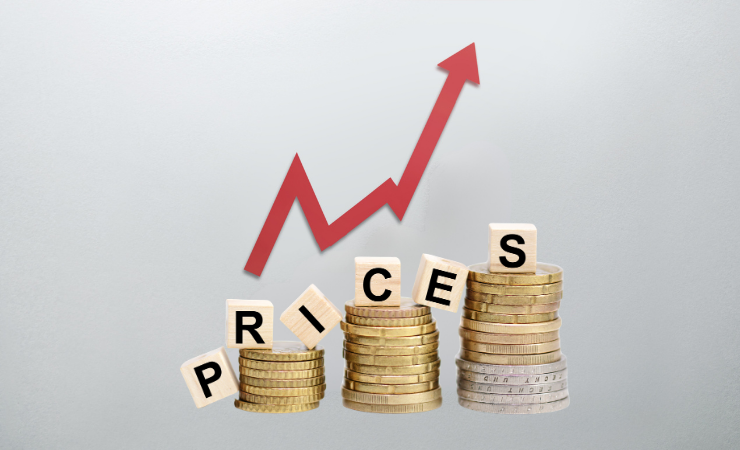
BUSINESS NEWS - South Africans are once again facing rising living costs after annual consumer inflation accelerated to 5.0% in June 2026, up from 4.5% in May, driven mainly by higher transport costs, housing and utilities, and insurance and financial services.
Statistics South Africa (Stats SA) released the consumer price index (CPI) for June on Wednesday, revealing that prices of goods and services increased by 0.7% on a monthly basis, signalling renewed price pressures on households already grappling with tight budgets.
The CPI is the primary tool used to calculate the rate of inflation. June’s inflation is above economists’ expectations of 4.7% and the SA Reserve Bank’s (Sarb) inflation target of 3.0%.
Inflation’s main driver
According to Stats SA, the main contributors to the annual inflation rate of 5.0% were transport (12.7% and contributing 1.7 percentage points); housing and utilities (5.5% and contributing 1.3 percentage points); and insurance and financial services (5.9%, and contributing 0.6 percentage points).
In June, the annual inflation rate for goods was 4.8%, up from 4.4% in May 2026, and for services it was 5.2%, up from 4.7% in May.
Senior research fellow at the University of Johannesburg’s School of Economics, Dr Charles S Saba, told The Citizen that this higher-than-expected print has amplified debate ahead of the upcoming Sarb interest rate decision, challenging forecasts that inflation would consistently moderate.
“The outcome in June is therefore discouraging, and it indicates that the sharp acceleration recorded between March and May did continue in June, despite the earlier surge in domestic fuel costs,” he said.
Inflation could ease
The reductions in fuel prices that took effect in July could result in inflation easing, as they were not captured in the June CPI calculation.
“The sizeable reductions in petrol and diesel prices that took effect on 1 July were not captured in the June CPI calculation. Their direct disinflationary effect should become visible in the July CPI release in August, while indirect benefits may emerge gradually through lower logistics and production costs,” said Saba.
“This provides a reasonable basis for expecting headline inflation to moderate in the near term, provided that the rand remains relatively stable and international oil prices do not rise sharply again.”
The beginning of trouble
Inflation started increasing following fuel prices, which rose significantly during April and May due to the international oil-market disruption associated with the conflict involving Iran.
“Higher diesel costs are particularly important because they affect freight, agriculture, food distribution and public transport, thereby transmitting the oil shock beyond the transport component of the CPI,” noted Saba.
“Core inflation and the behaviour of food and services prices will consequently be important in assessing whether these pressures are becoming more persistent.”
Future remains uncertain
Saba said the outlook remains exposed to geopolitical risk, as negotiations involving the United States and Iran have resumed, with no durable agreement yet to be reached.
Any renewed disruption or restriction affecting the Strait of Hormuz could raise crude-oil and global fuel prices again. As a net importer of crude oil and refined petroleum products, South Africa would face renewed pressure on domestic fuel prices, transport costs and inflation, particularly if accompanied by rand depreciation.
“Given these explanations, the June CPI outcome has further increased the urgency for an immediate interest rate increase, given the continued war in the Middle East, which does not currently eliminate further inflation risk.
“The Sarb should, therefore, distinguish between temporary supply-driven inflation and persistent second-round effects before tightening policy further.”
Article: Caxton publication, The Citizen
‘We bring you the latest Garden Route, Hessequa, Karoo news’