

Update
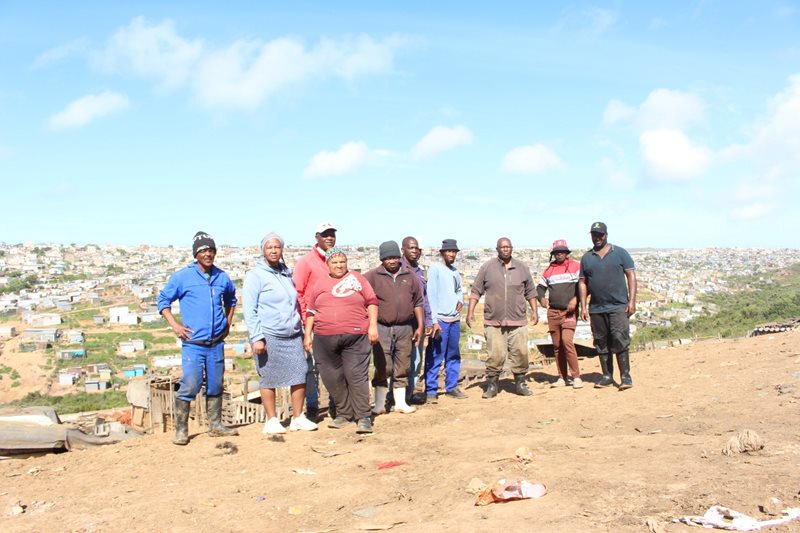
MOSSEL BAY NEWS - A month after the heavy rains brought the ongoing crisis on the KwaNonqaba pig farms to the fore, the farmers said they are still waiting for feedback from the Mossel Bay Municipality on their troubles with the land and the issues it causes.
Late July, the heavy rains on the farms led to multiple visits from the Garden Route SPCA, which found the waterlogged land covered with mud and faeces. Some piglets had even drowned in the deep mud. The SPCA said the conditions were dire.
The pig farmers previously told Mossel Bay Advertiser they were aware of these conditions, but felt they had been put in an impossible position after being moved to this land in 2023. The land sits on an incline and has no drainage system, and its soil is mostly clay.
The farms had previously been on a property between Mayixhale Street and the N2, but were moved about a kilometre away following a court order issued by the Cape Town High Court on 17 June 2020, ordering the municipality to comply with relevant by-laws, including the Nuisance By-law, and to remove the pig farms within a period of two years.
Dangerous navigation
The farmers said there were problems with the land from the start. They claim that after it rains, the land is extremely difficult and dangerous to navigate, and has even caused injuries to some farmers while they tried to tend to their pigs.
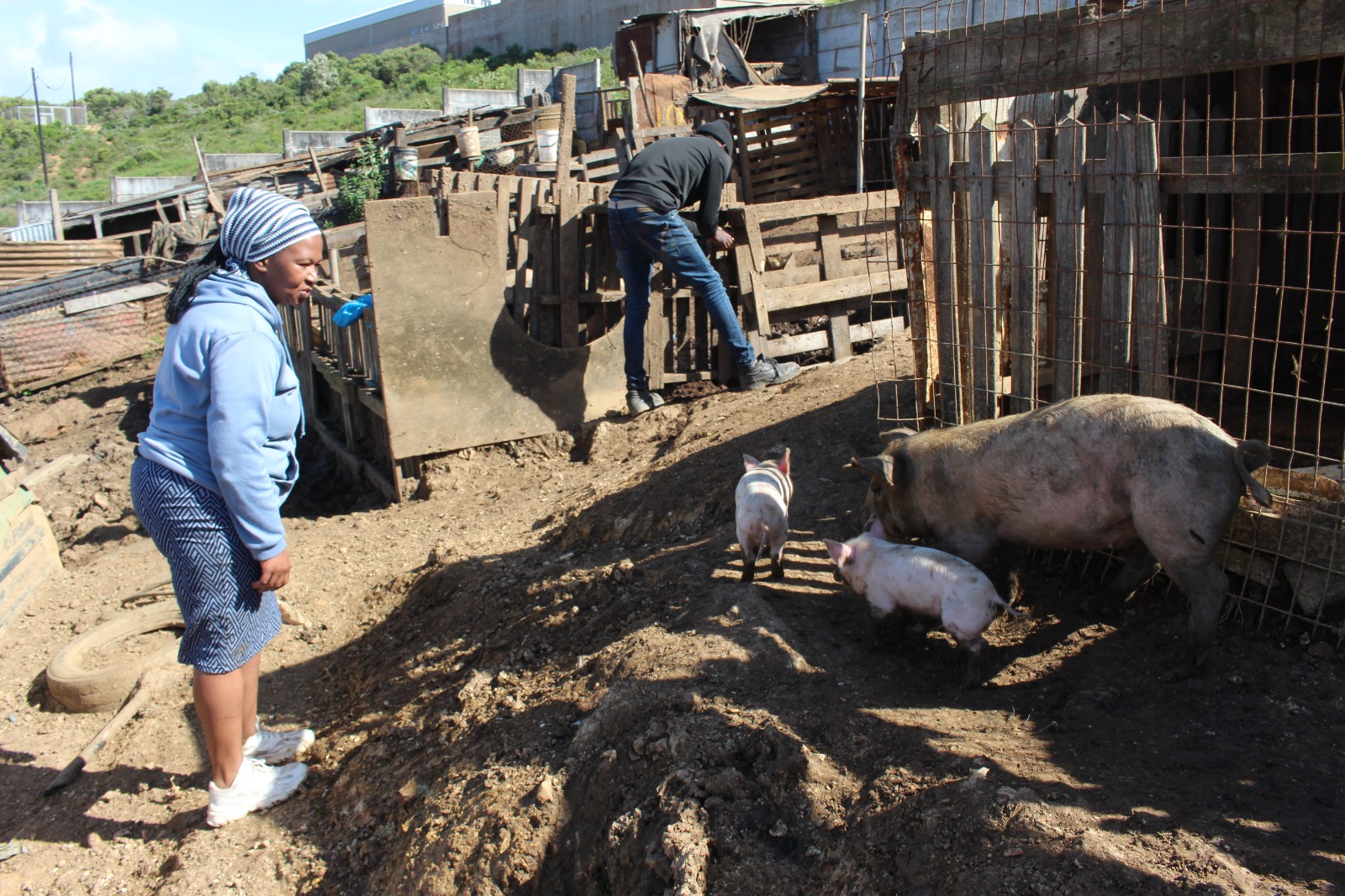 Lungiswa Sesani and her remaining piglets. Photo: Chelsea Pieterse
When the Advertiser visited several farmers on the land on Wednesday 26 August, the publication was told that they would like to build up their pigpens and lay down flooring to mitigate the mud during the rain, but they were apprehensive about doing so, because they didn't know how long they would be on the land.
"If they can give us a written agreement to say we can use this land for the next nine years or five years, then we can start investing in it. But at this stage, we don't know if we will be made to move again, and as farmers who don't have a lot of resources, we cannot afford to build up an area that we will possibly be moved from in the near future," said one farmer, Lungiswa Sesani.
Consider our input
Another, Siphiwe Bali, said the farmers would like to be consulted in future decision-making, instead of just being told what to do. "We want to be able to give our input," he said.
The municipality was sent multiple questions about the land being used by the pig farmers, why that piece of land was chosen, if there were plans to move the farmers elsewhere and if there were any assessments made on the land to see if it was suitable for piggeries.
The same media enquiry asked about the SPCA's request for an urgent meeting with the municipality.
The municipality responded to this query with the following: "The SPCA has requested a meeting pertaining to the pig farming activities and same has been confirmed by the municipality."
The farmers also raised some complaints about the SPCA breaking holes in the walls around the property to let the pigs out. The SPCA had previously stated that this was done, with the municipality’s permission, to enable the pigs to access the greenbelt and get away from the muddy and wet conditions, seeing as pigs cannot regulate their body temperatures, especially when they are cold.
The farmers said these holes created several more problems for them, as their pigs are now roaming as far as Asla Park and Voorbaai. Many were attacked and killed by dogs, and some died from electrocution.
Pigs have died
“Many pigs have died due to the flooding, the dog attacks and electrocution,” said Sesani.
She said the SPCA has since come back after being informed of the dog attacks, to close up the holes with wooden pallets, but these are broken down by the pigs again.
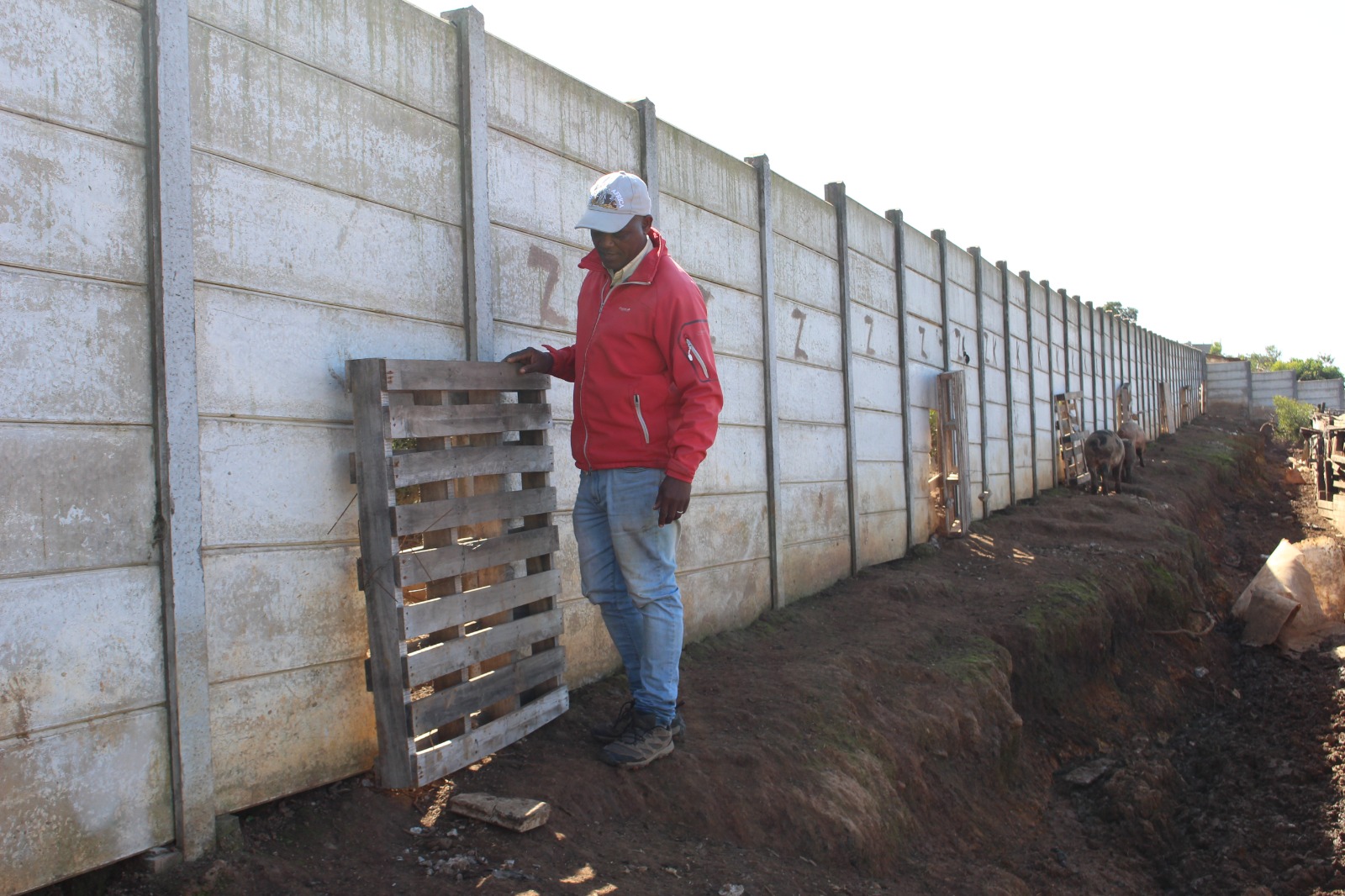 Siphiwe Bali reinforces one of the pallets placed over the holes in the enclosure’s walls. Photo: Chelsea Pieterse
On that subject, the SPCA maintained that this step would not have been taken if the animals had not been found in such dire conditions. “The decision was made from an animal welfare perspective, with the immediate priority being to improve the conditions in which the pigs were being kept,” said the SPCA.
It added that after the dog attack reports, it had immediately rallied a team to round up as many pigs as they could find outside the farm and herd them back in, and close the holes that were identified as access points for the dogs. “We have also been in communication with the farmers and have provided guidance and assistance where possible.”
Assistance provided
It added that there was a WhatsApp group with both pig farmers and the SPCA team, and that some farmers had thanked the SPCA for the assistance and guidance it has provided. “In addition, the SPCA has sent the farmers a memorandum outlining what is required from an animal welfare perspective. The intention is to clearly set out the requirements so that the farmers know what is expected and so that the SPCA does not have to repeatedly approach them regarding the same issues.”
It further stated that the pallets were an immediate response to the situation, but that the longer-term infrastructure and containment issue required involvement and co-operation from the municipality and other relevant parties.
The SPCA said some of the assistance it had provided to the farmers included attending to welfare concerns regarding the pigs and inspecting conditions, guiding the farmers regarding the welfare requirements for the animals, visiting the farms regularly and helping to feed the pigs, communicating with the farmers regarding the requirements that need to be met and continuing to engage with farmers and provide assistance and guidance when concerns are brought to its attention.
Previous articles:
- Urgent meeting requested on welfare issues on Kwa pig farms
- Pig farmers question municipality's 'sense of humanity'
- Pig Farm targeted by Red Ants
- Huis, paleis, pondok, varkhok
- Video: Huis, paleis, pondok, varkhok
‘We bring you the latest Garden Route, Hessequa, Karoo news’