

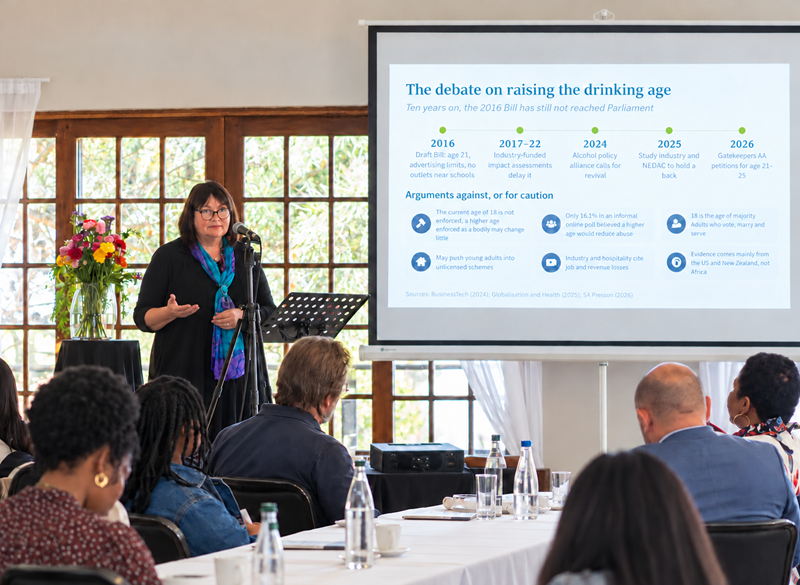
MOSSEL BAY NEWS - Nearly half of South African children aged 10 to 17 have tried alcohol, with many starting years before the legal drinking age of 18. Would raising the legal drinking age to 21 make a difference, or would it become another law that exists only on paper?
This is the question that Prof Marelize Schoeman of the University of South Africa's (Unisa) College of Law explored at the Childhood Substance Use, Related Disorders and Mental Health Conference held at Ilita Lodge in Great Brak River on 30 September and 1 October.
The two-day conference was hosted by Unisa's College of Law in partnership with the national office of the South African National Council on Alcoholism and Drug Dependence (Sanca) and Sanca Garden Route.
Research results
Schoeman presented research titled "Does legal drinking age matter? A cross-national comparative analysis of minimum drinking age laws and childhood alcohol consumption. The study surveyed 3 566 children aged 10 to 17 across all nine provinces.
The findings paint a concerning picture.
Almost half (46.4%) had consumed alcohol, while 21.7% were current drinkers. Of those who drank, 43.1% had their first drink by the age of 12, while the most common age for a first drink was 14.
The proportion of current drinkers more than doubled between the ages of 12 and 13. Among 17-year-olds, 44.9% reported drinking, despite being below the legal drinking age. Almost a third of respondents said liquor outlets did not ask for identification, while 43.4% bought alcohol at shebeens or taverns.
Arguments for and against
The research examines arguments for and against raising the legal drinking age to 21.
Supporters point to evidence from countries such as the United States and Canada suggesting that restricting access to alcohol until the age of 21 can reduce alcohol-related harm among young adults.
A higher age limit could also limit the supply of alcohol from older friends to children.
However, the research highlights a fundamental problem: South Africa already struggles to enforce its existing legislation.
Limited numbers of liquor inspectors, unlicensed outlets and inadequate compliance mean that children continue to access alcohol.
Raising the age could also push some young adults towards unlicensed outlets, while leaving the law unchanged for children under 18, who are already legally protected from the sale and supply of alcohol.
The study notes that evidence supporting a higher drinking age largely comes from countries with stronger enforcement systems, and that there is no evaluated evidence of the effects of changing the drinking age in an African country.
The researchers concluded that raising the age could protect young adults, but its impact on children remains uncertain without effective enforcement.
"We do not have to wait for a change in the law to strengthen the protection available to children today," they emphasised.
They called for action to reduce children's access to alcohol and the harm it causes.
‘We bring you the latest Garden Route, Hessequa, Karoo news’