


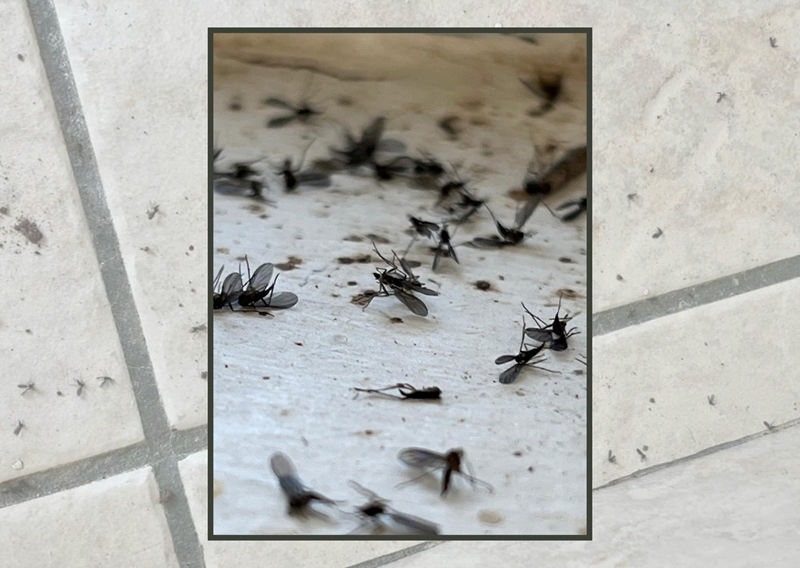
MOSSEL BAY NEWS - The influx of midges (Afrikaans: muggies) in the greater Mossel Bay area, which some residents have reported in recent weeks, is likely due to the warmer winter this year.
A Great Brak River resident of 20 years, Val Marsh, recently told Mossel Bay Advertiser she has never experienced so many midges before.
She had noticed the influx about a month and a half ago. "It is to such an extent that I have to vacuum or use the feather duster two or three times a day," she said.
"It became so annoying that I started asking people around me if they were experiencing the same thing, and everyone I spoke to said they had also noticed it."
Another Great Brak River resident of almost 13 years, Val Thomson, echoed Marsh in that she had not seen this many before, either. She said they particularly like to bunch around any light sources and windows with natural light.
"We always had the odd one about, but this is ridiculous!" said Thomson.
She said she had gathered many midges from her window sills; a whole tablespoonful from one 45cm sill once.
The Mossel Bay Advertiser sent out enquiries to several entomologists around the Western Cape and other parts of the country and was directed to Dr John Midgley, head of natural sciences at the KwaZulu-Natal Museum.
The paper sent him a few questions and photos of the insects Marsh had submitted. He said while he cannot make out the species, he was able to tell that they are fungus gnats (superfamily: Sciaroidea).
Asked what the possible cause of the influx could be, Midgley said he had spoken to some people in the Western Cape who said the winter has been mild this year.
"The larvae of these flies live in various fungi, including underground. It is likely that the (relatively) warm winter has allowed them to develop an extra generation this year by allowing their food to develop through winter and, because they are small, allowing them to take advantage of it," he said.
"The cooler weather has probably suppressed the larger predators, either mammals or birds that are less active, or larger-bodied insects that have not been able to develop an extra generation, but it has not been cold enough to suppress the small insects."
He added that migratory birds like the barn swallow have not returned yet.
Midgley said midges are prey to many animals such as bats, swallows and predatory insects.
When asked if he had any advice for people experiencing this influx, he said: "Mostly be patient and wait for the weather to warm up. Population build-ups are part of natural cycles, and things will return to normal in a few weeks. On a local scale, they might be attracted by lights, so turn off unnecessary lights; you'll save electricity and have fewer insects," he said.
‘We bring you the latest Garden Route, Hessequa, Karoo news’