

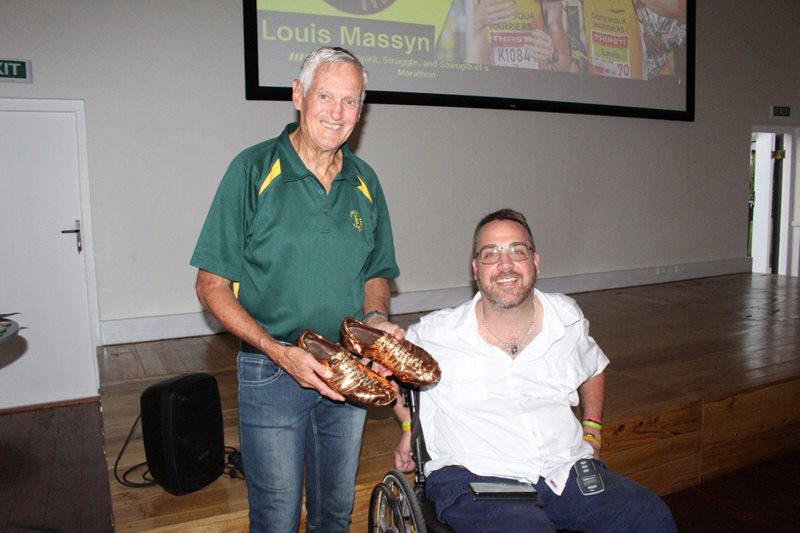
MOSSEL BAY NEWS - In an effort to raise funds for conservation in Great Brak River, Louis Massyn (75), the first person in history to complete 50 Comrades Marathons, recently joined Scott Thomson, chairperson of the Great Brak River Conservancy, in celebrating endurance.
The event, held at the Bioscope Venue in Great Brak River on Tuesday evening, 7 April, saw a decent turnout.
Massyn, a George resident who holds 10 silver Comrades medals, addressed the attendees first, telling the audience how he came to run his first Comrades, and more about his running journey over the last five decades.
He said he was in church in 1973, listening to a sermon, when it inspired his decision to run the next Comrades Marathon. Six months later, he took it on. It also happened to be his very first race.
Massyn told how he bought his first pair of shoes at a sports shop in Welkom, the most expensive pair for just R23.
However, a few days before the race, someone told him he would need two pairs for it, so he bought another pair in Pietermaritzburg for just R4.99. Funny enough, he ran his entire first Comrades in the cheaper pair, and only used the more expensive pair to run his second Comrades in 1974.
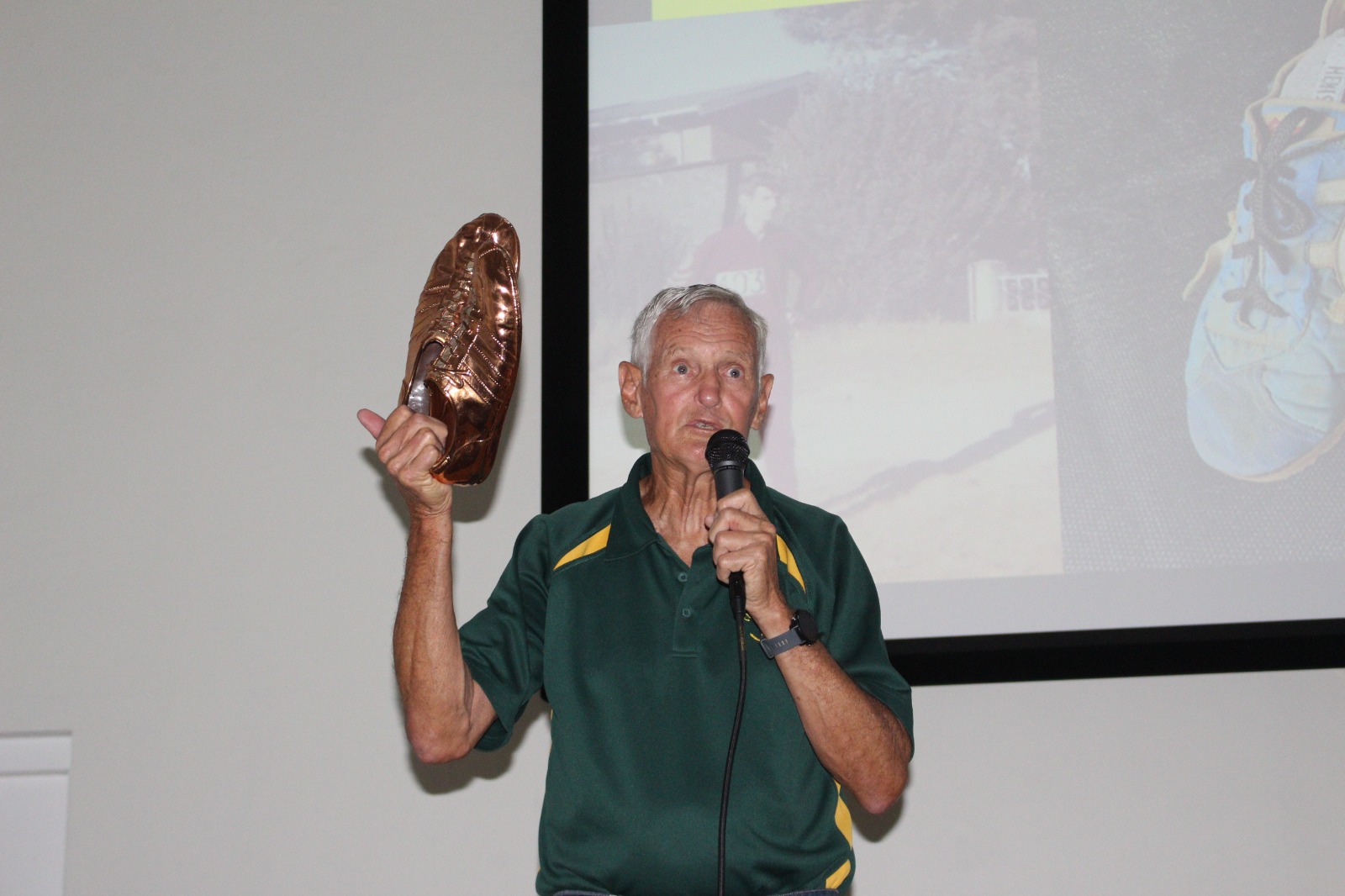 Louis Massyn and Scott Thomson. Massyn holds the first pair of running shoes he ever bought. Photo: Chelsea Pieterse
Massyn spoke about the structure of the race and the process of entering in those years. He showed photos of him competing throughout the years, including last year, when he became the first person in the world to complete 50 Comrades Marathons.
Towards the end of his presentation, he held up a special medal he had received from the Comrades Marathon. He said only 100 were made and handed out. Massyn said he had seven or eight of them left, and he had signed the box in which the medal came. This was presented to Thomson for the conservancy to use to raise funds for its conservation efforts.
The conservancy then handed a protea plant over to Massyn as a token of gratitude for coming to speak at the event.
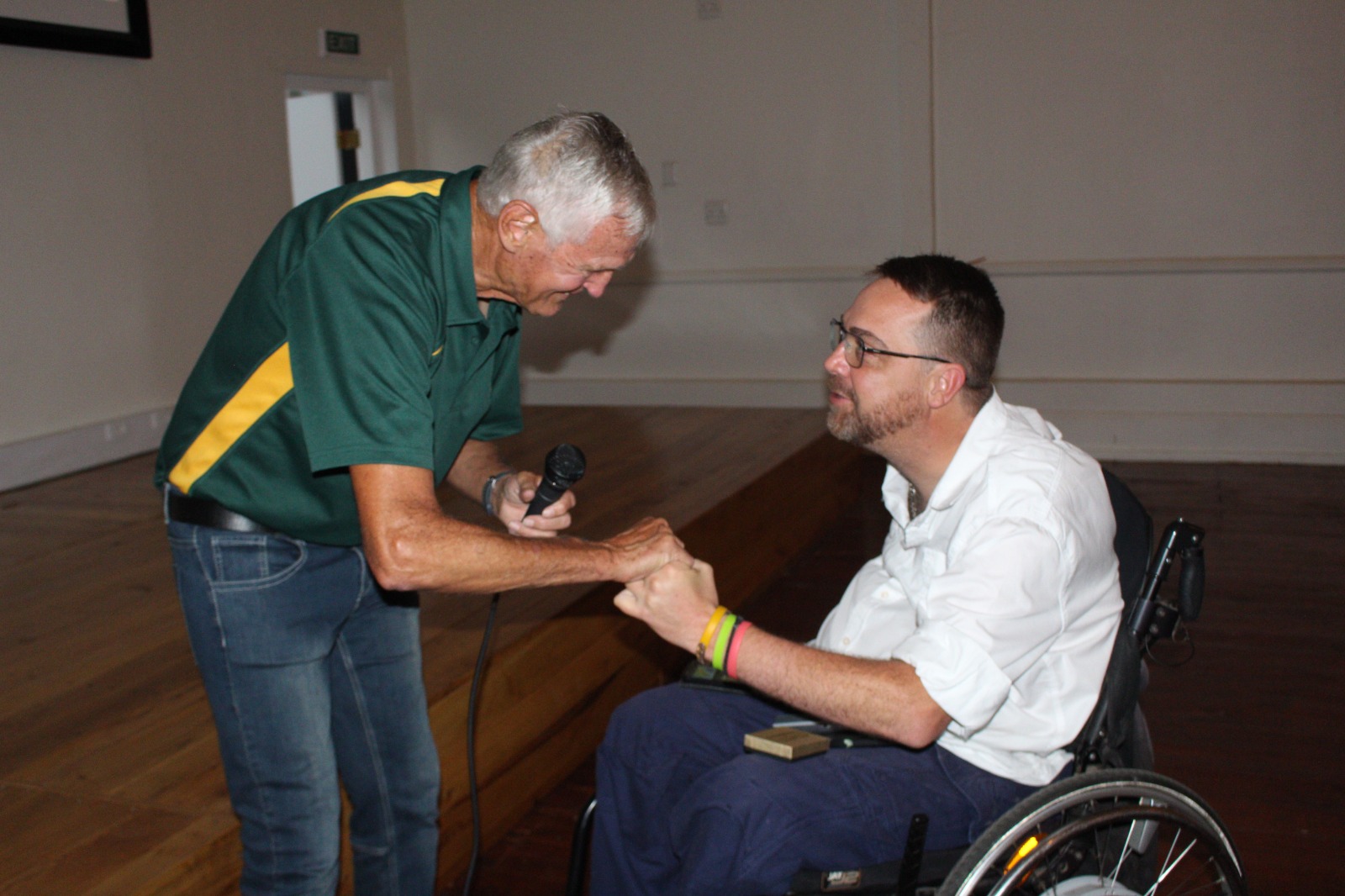 Louis Massyn hands the medal over to Scott Thomson. Photo: Chelsea Pieterse
Next, it was time for Thomson to address the attendees on the history of Great Brak River’s environment, going as far back as the Paleo Agulhas Plain, which existed during the Palaeolithic Period from between 2.5 million years ago to about 10 000 years BCE.
Thomson said the Great Brak River used to be just a tributary of a much larger system that ran through the Paleo Agulhas Plain and then joined others like the Little Brak River, Hartenbos, Maalgate, Gwaiing and Kaaimans into a major system that ran nearly 20km out to sea.
Thomson went on to explain the recession and retreat of the ocean, saying the last recession and retreat took place about 70 000 years ago, and that our early forefathers who occupied this land would have seen this retreat.
He touched on the history of the Dutch East India Company and Jan van Riebeeck, who arrived in South Africa 374 years ago, on 6 April 1652.
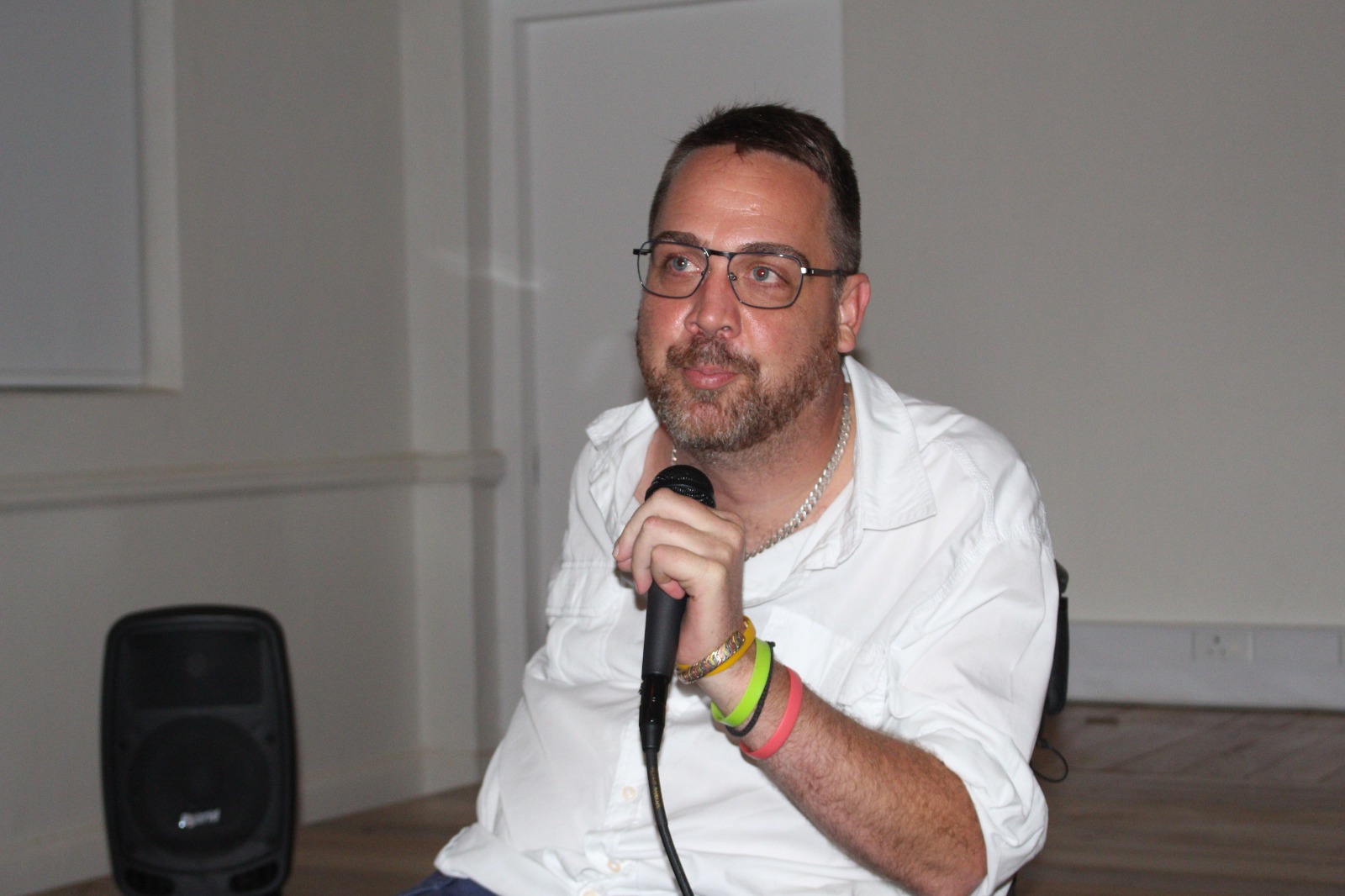 Scott Thomson, chairperson of the Great Brak River Conservancy, spoke at length about the history and future of the area’s environment. Photo: Chelsea Pieterse
Through tracing events done in the Wolwedans Kloof, the conservancy has found yellowwood trees, which they have dated to between 400 and 450 years old, meaning some of the flora in Great Brak today predates Jan van Riebeeck.
Thomson spoke a bit more about the history before arriving at 1919, when Great Brak was officially established as a town and saw the beginning of industry. This included the acquisition and mass planting of the black wattle tree, a major, fast-growing alien invasive species. He said the conservancy has been fighting to try to remove this since.
He spoke about the chemical inputs from various industries in the area into the estuary, which he said could still be found at certain depths within it today.
Thomson spoke about the development of the land over the decades and how it has affected the flood plain and the area’s dune system. He also spoke about the fauna, and where the animals of this area go as more and more land is developed.
“With conservation comes restoration and the sustainable management of resources. We have to actively plant back and restore,” he said. “We have to actively concentrate on solutions and become active citizens to drive the change we want to see.”
All proceeds from this event will go towards the conservation work carried out regularly.
For more information on how to support the conservancy or become a member, dial 079 187 0257 or 060 846 1072, or send an email to [email protected].