


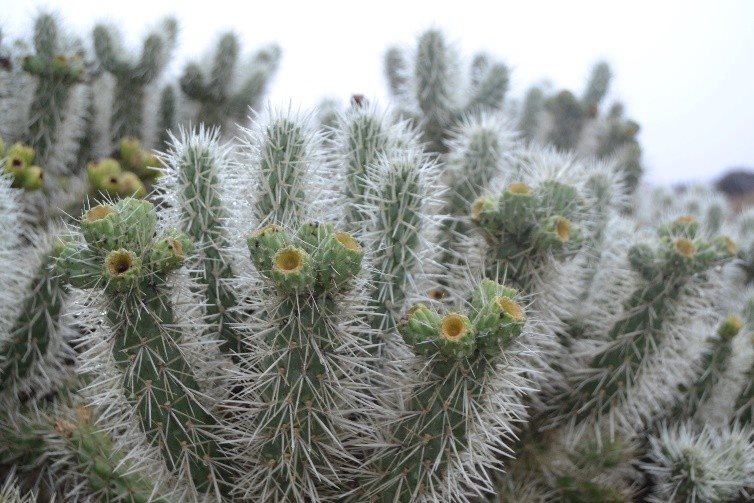
ENVIRONMENTAL NEWS - Two cactus species, Cylindropuntia pallida (thistle cholla) and Tephrocactus articulatus (pine cone cactus), may appear harmless, but their presence in South Africa’s natural and agricultural landscapes is becoming an increasing concern.
Both species are invasive alien plants that were introduced to South Africa as ornamental plants. T. articulatus is native to Argentina, while C. pallida originates from Mexico.
Once established outside cultivation, these cacti can spread rapidly and become difficult and costly to control.
Recent engagements with farming and rural communities in arid regions have highlighted concerns about the presence and spread of these species. These observations reinforce the importance of early detection, continued monitoring and timely management to prevent isolated populations from developing into larger infestations.
How do they spread?
These cacti can spread through seeds and fruits, but they can also spread through plant fragments, or propagules. When pieces of the plant break off, they can survive and establish new plants when they land in suitable conditions. This makes responsible disposal particularly important.
Cactus material should never be dumped on roadsides, open land, illegal dumping sites or other areas where it could establish and spread.
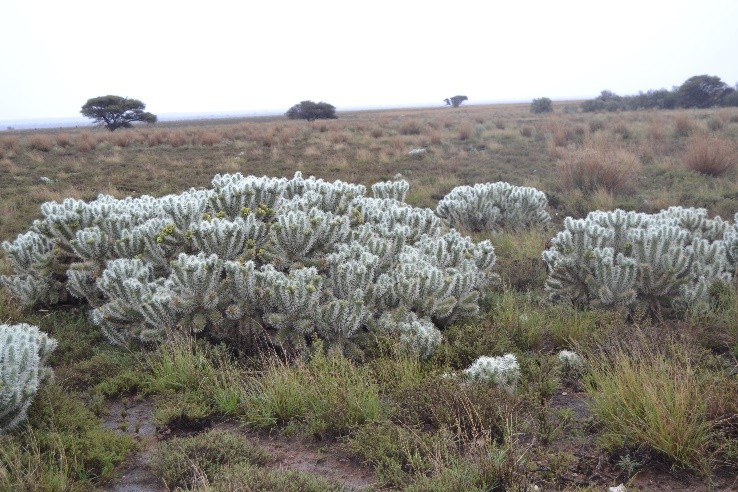 Cylindropuntia pallida
Where are they spreading?
Both species have been recorded mainly in farming areas and around illegal dumping sites, where discarded plants or plant fragments can survive and establish new populations.
If left unmanaged, these populations can spread into surrounding agricultural land and natural areas, increasing the cost and difficulty of control.
Why should farmers and communities be concerned?
Invasive cacti can affect people, livestock, agricultural activities and biodiversity. C. pallida has sharp, barbed spines that can penetrate skin, while T. articulatus can produce tiny spines known as glochids, which can irritate.
Dense infestations can restrict access to communal land, reduce available grazing and interfere with the movement of people and livestock.
They can also compete with indigenous vegetation and contribute to the degradation of natural habitats.
Spot it. Report it. Stop the spread.
What should people do?
Prevention is far cheaper than control. Do not plant, move or dump these cacti. If you find a suspected infestation, report it to the South African National Biodiversity Institute (SANBI).
Simply report on one of the following platforms: Download either the iNaturalist (A Community for Naturalists · iNaturalist), upload digital photos, date and locality of your observation.
Alternatively, contact Menzi M Nxumalo in the East London regional office, 043 726 7492 or WhatsApp any information on 0781887844. Email: [email protected]/ [email protected].
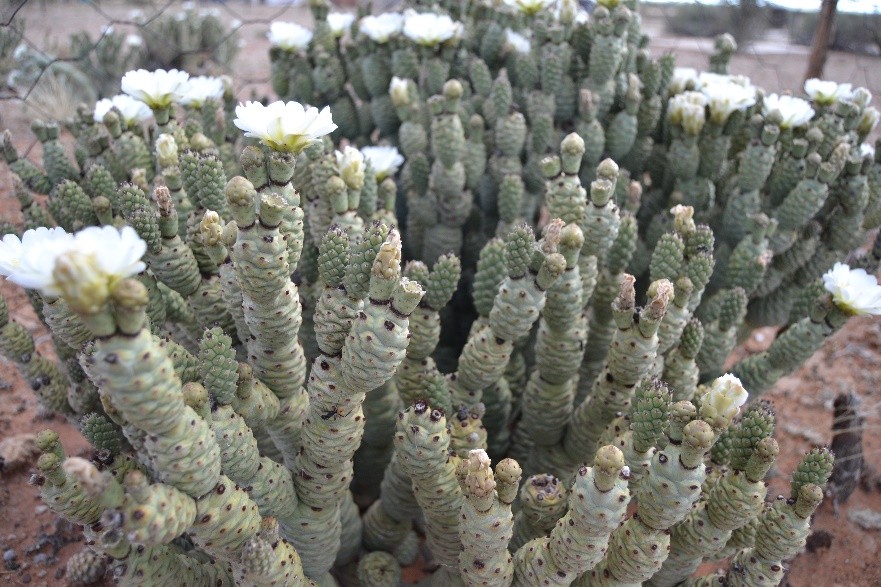 Tephrocactus articulatus
‘We bring you the latest Garden Route, Hessequa, Karoo news’